

RICHELIEU, THE CLASSIC SHOE PAR EXCELLENCE
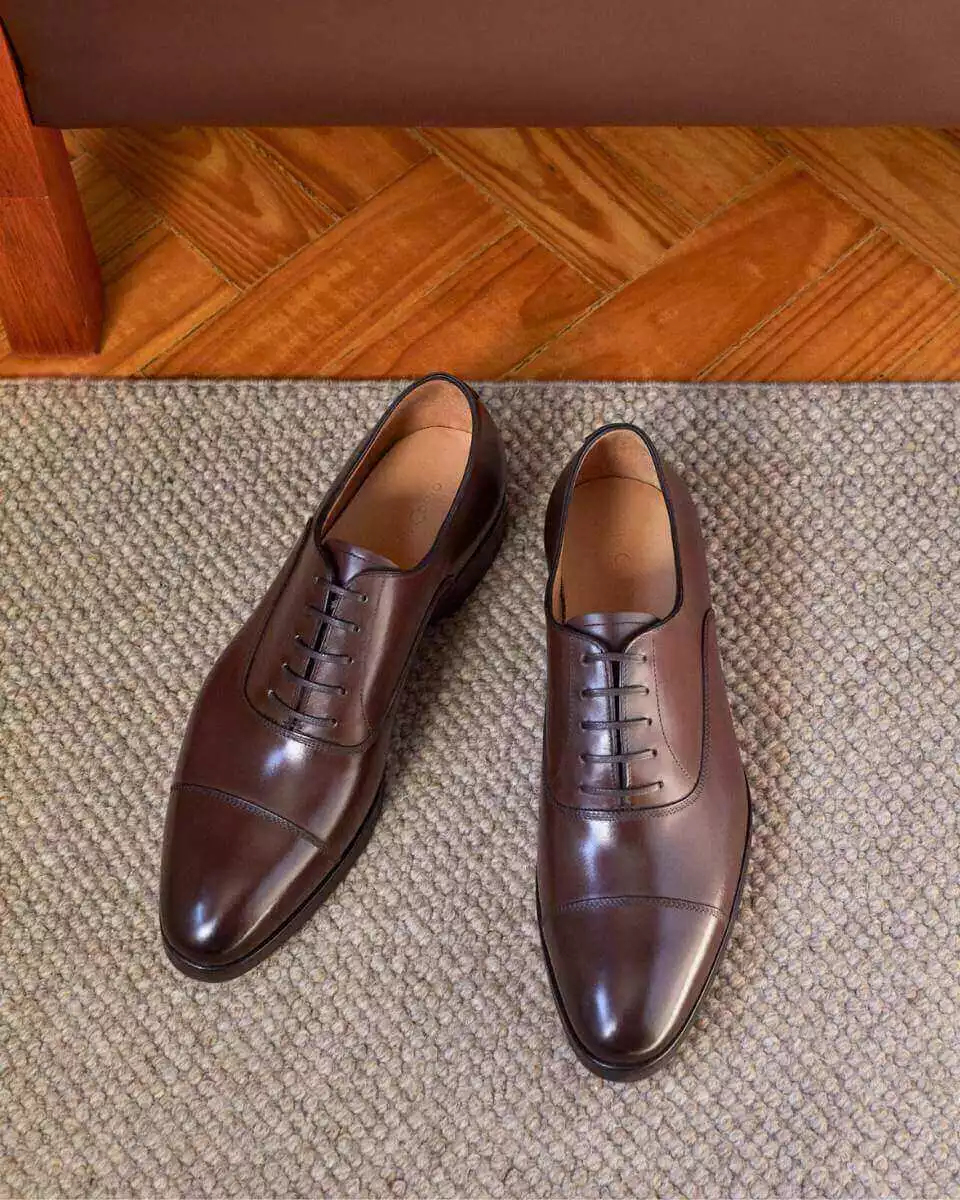
When we think of Richelieu, we think of the pair of black shoes that go with all our suits. The kind you'd also wear for a variety of ceremonies. In short, a dressy pair with which you're sure not to make any mistakes.
The origins of the shoe are unclear. There are three competing versions:
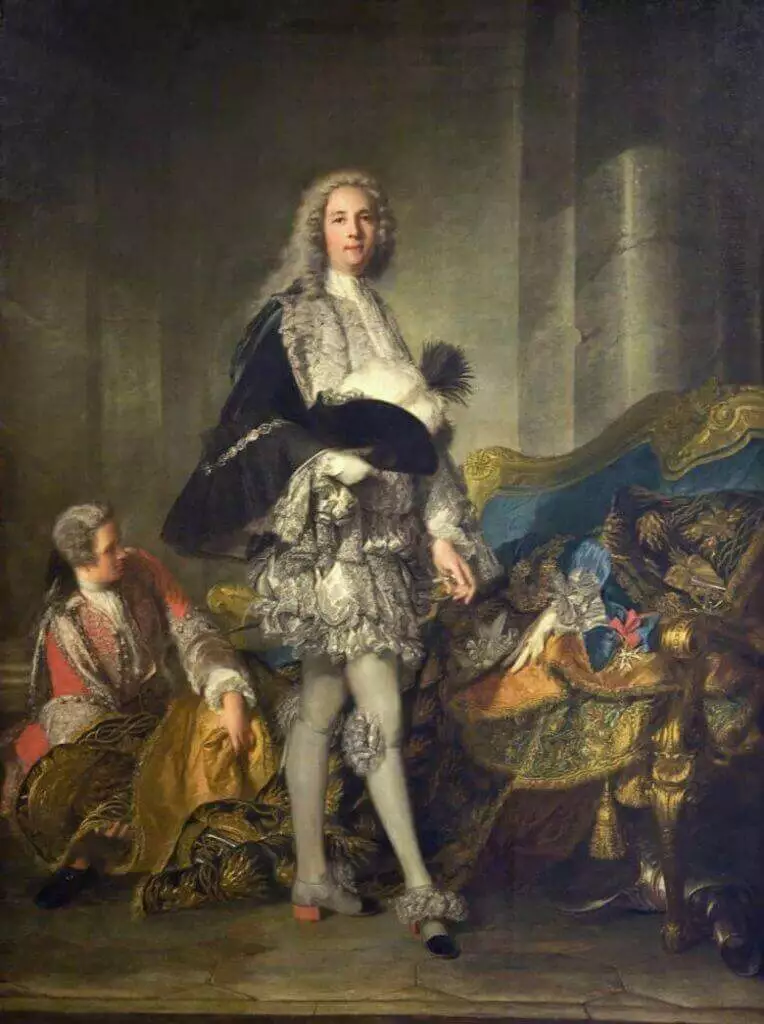
- For France, the Richelieu comes from the Duc de Richelieu, great-nephew of the illustrious cardinal who introduced this model to the court of Louis XIV.
- In Ireland, Richelieu became Balmoral, in reference to a boot specially designed for Prince Albert. Today, Balmoral is the name given to a Richelieu with a side cut.
- Last but not least, our best enemies, the English, named their Richelieu after Oxford University. This is the “Oxonian” model. Even today, on the other side of the Channel, we still speak of the Oxford model.
DERBY, CAMPAIGNING FIRST AND FOREMOST
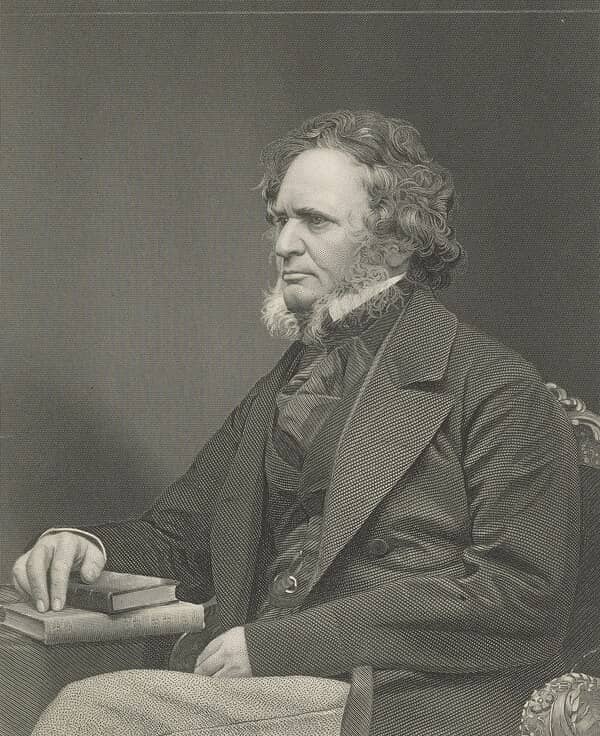
Here too, the Derby has several origins. The first, of course, comes from England in the 19th century. Edward Smith-Stanley, the 14th Earl of Derby and then Prime Minister of the United Kingdom, found his richelieus tight. So he asked for lacing that was more open and less constricting on the instep: the Derby was born.
Another origin comes from Prussia. During the Napoleonic Wars, General Von Blücher came up with the idea of a boot that would be easier for his soldiers to remove, giving them a definite advantage in the heat of battle. In the United States, the Blücher name has remained associated with the Derby.
RICHELIEU, SPECIFIC FEATURES AND USES
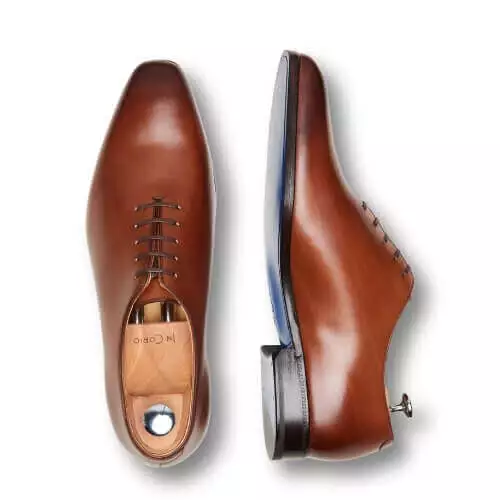
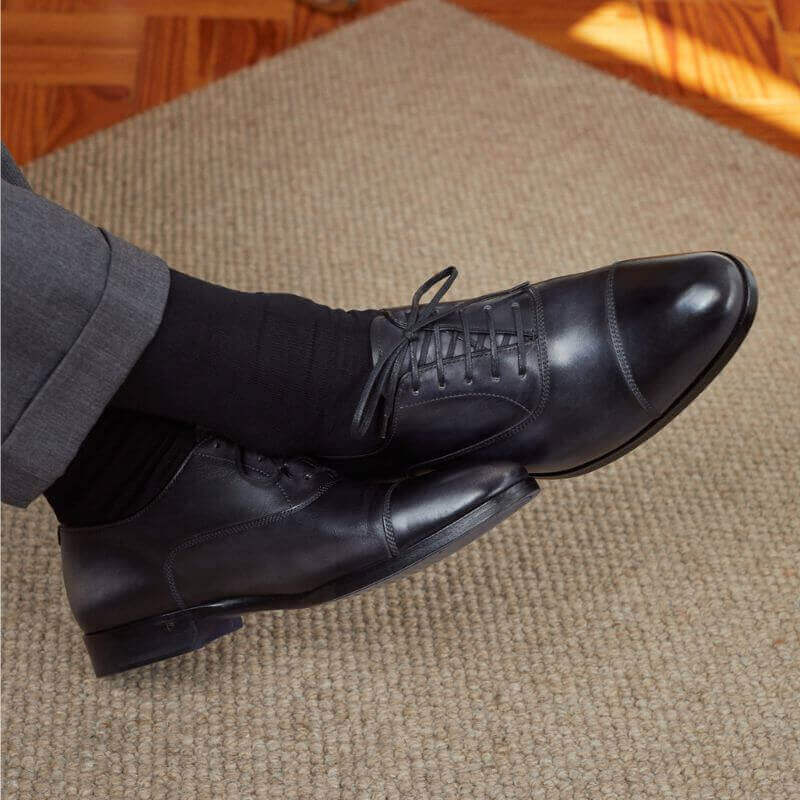
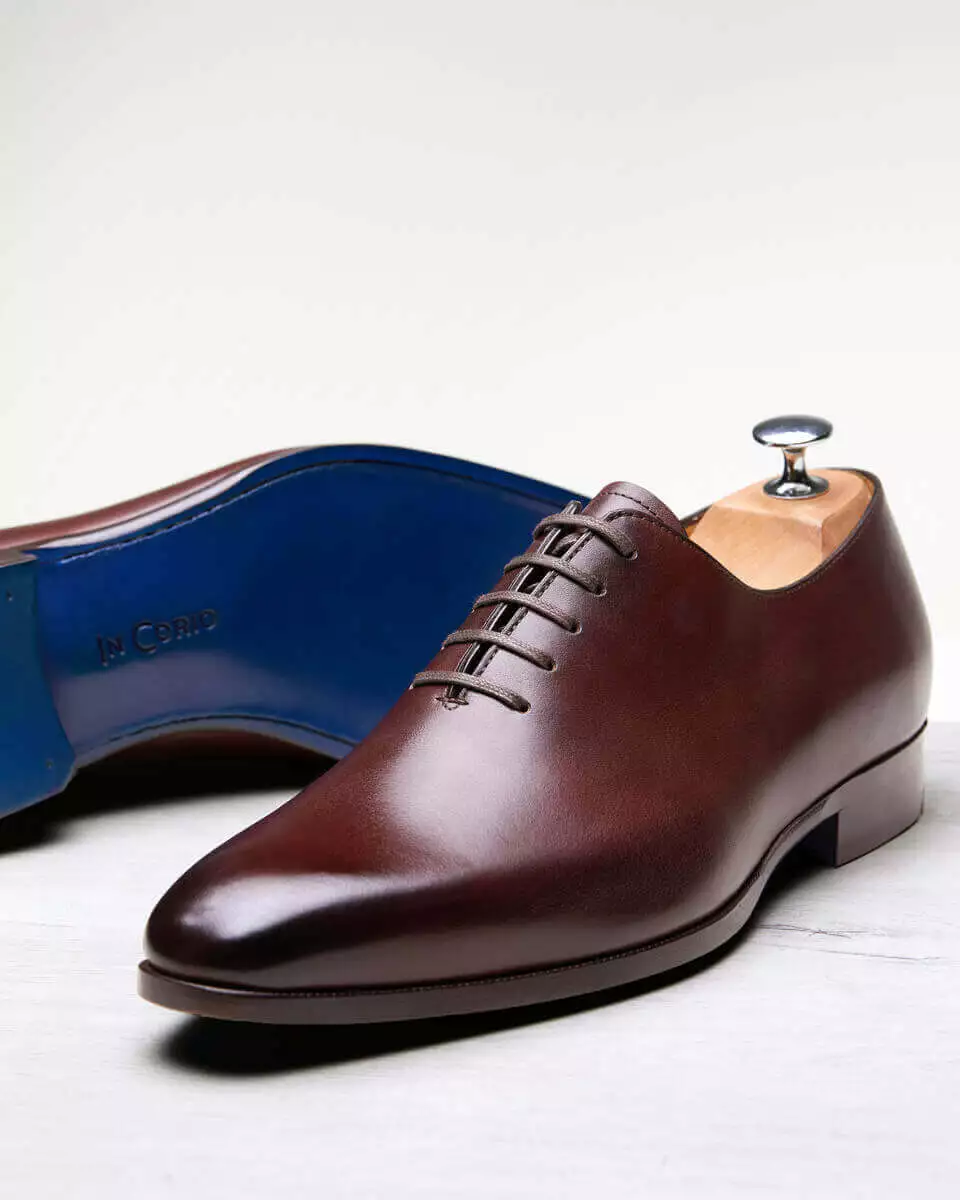
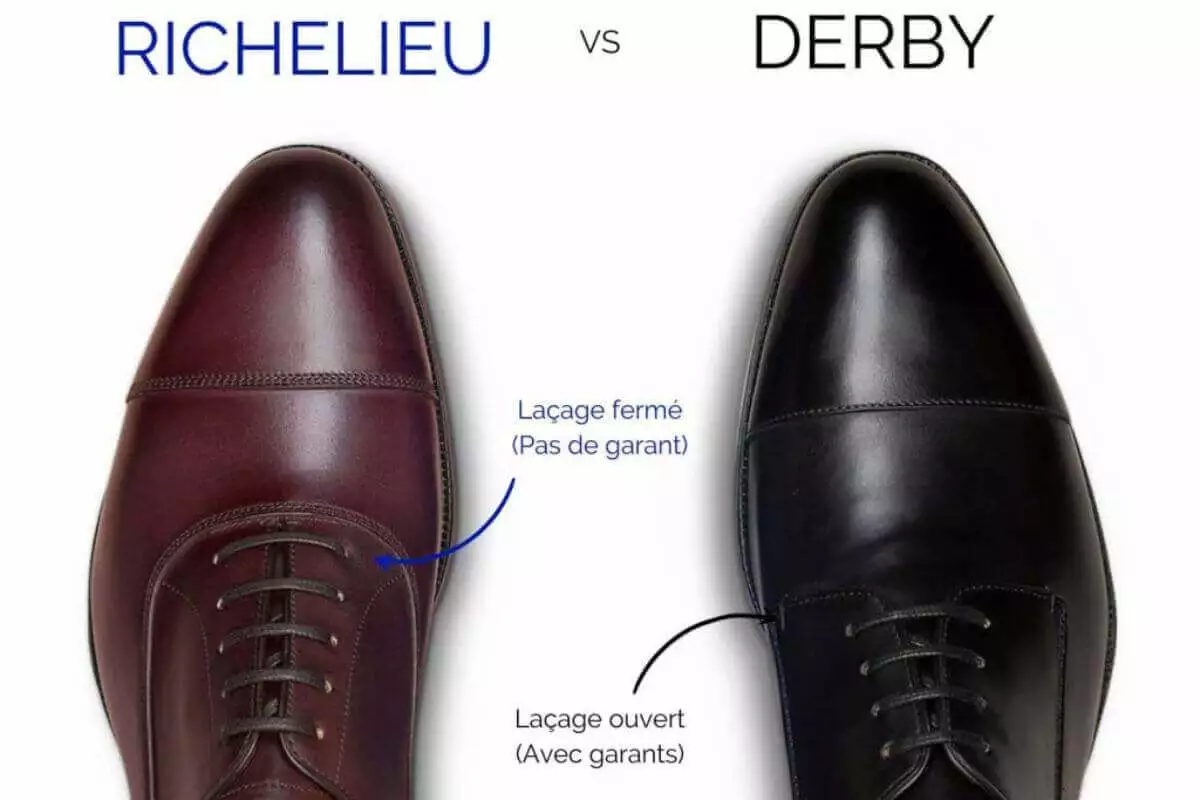
The Richelieu is by nature the classic shoe. It is distinguished from the Derby by its closed lacing, i.e. the two garants (the sides of the shoe) through which the laces pass are linked by a seam in the middle of the vamp (which corresponds to the bottom of the instep). Visually, this creates a V-shaped slit. This makes the Richelieu easy to identify.
When it comes to comfort, the Richelieu provides ideal support for the foot. Thin feet in particular appreciate this type of shoe.
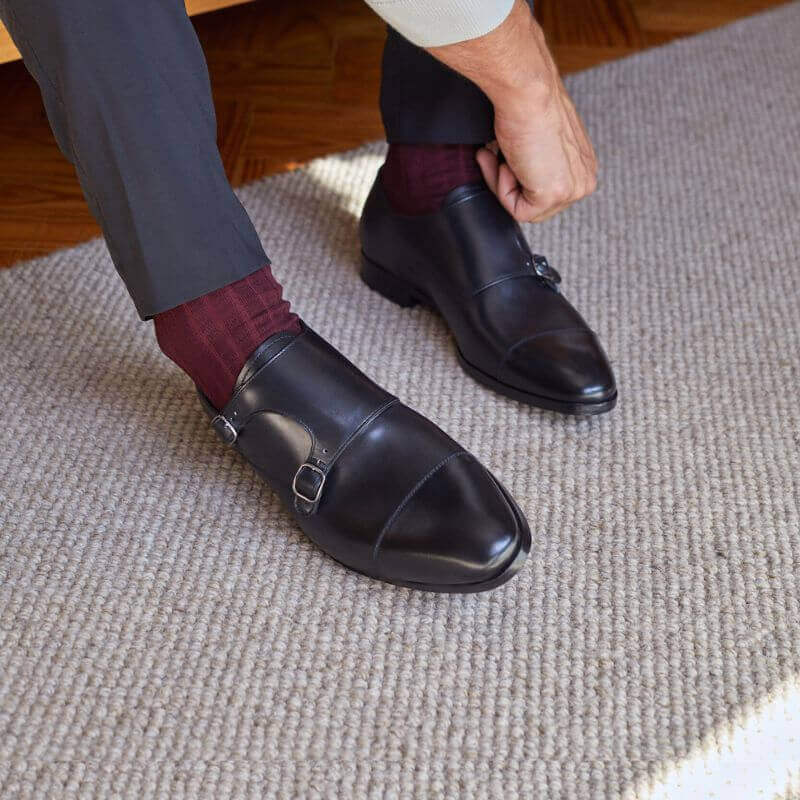
In terms of use, the Richelieu has long been confined to the most formal occasions: work, weddings, formal outings... In fact, it was always available in black. Today, as fashions have evolved, the Richelieu is available in a wide range of colors, and can be worn for any occasion.
For example, at In Corio we offer it in black, chocolate brown, burgundy, cognac, fawn, khaki, brown suede... It's a far cry from the traditional “No Brown in Town” adage.
On the contrary, the idea is to take the Richelieu out of its straitjacket. Suit, chino, jeans... any outfit is possible. And from a very classic model, the Richelieu becomes an everyday pair, capable of adapting to any situation. What's more, as you know, we attach great importance to the comfort of our shoes. And our Richelieus are no exception: you can happily wear them for days on end.
AT EASE IN THEIR DERBY
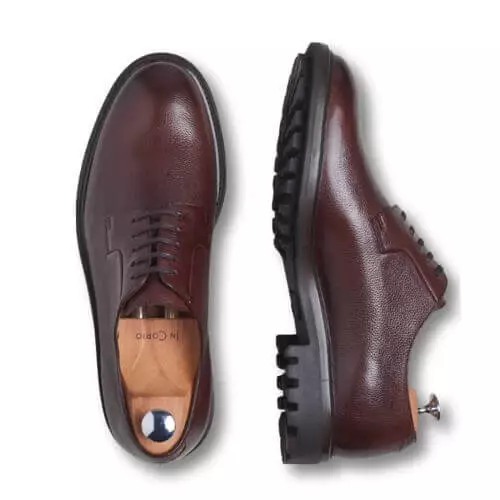
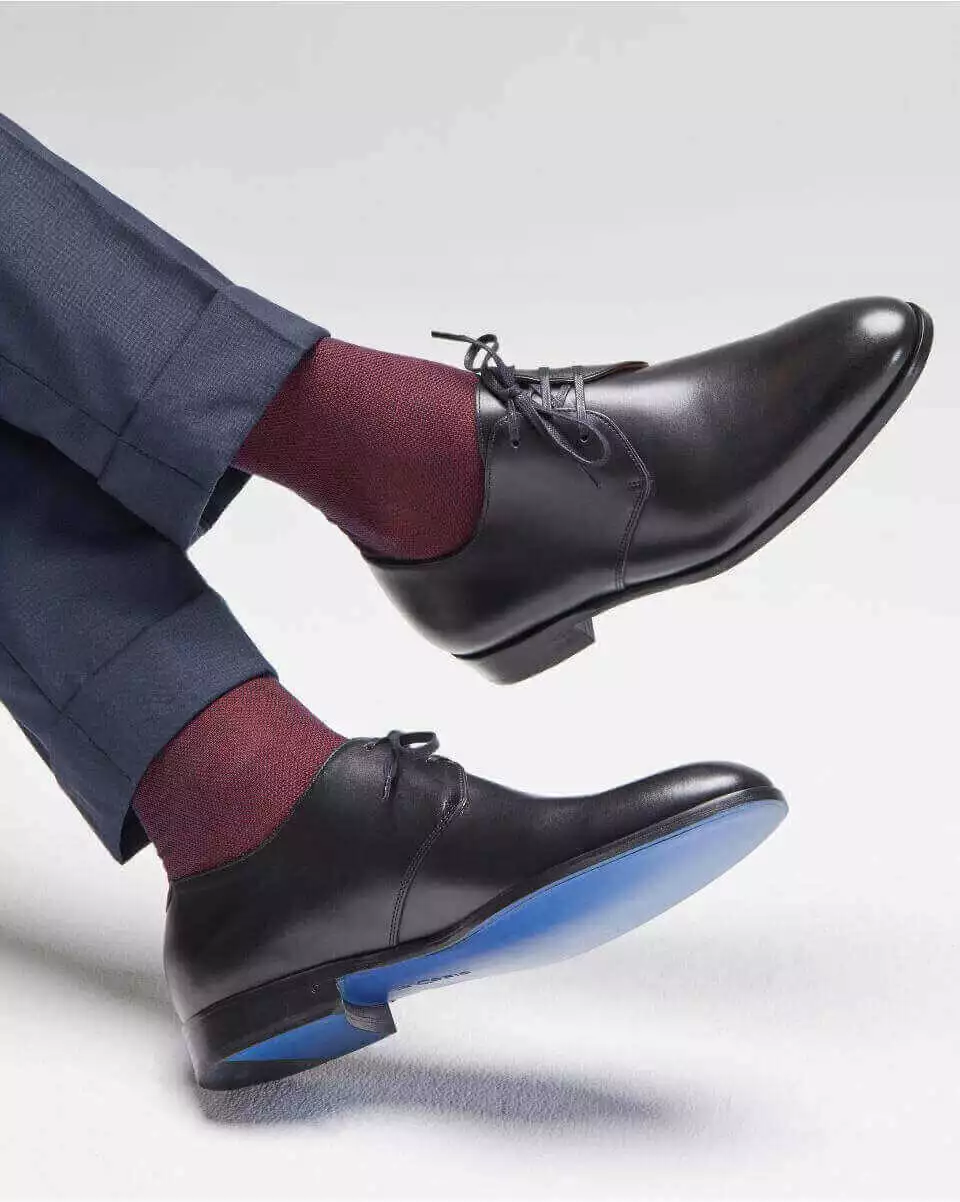
As you might have guessed, the Derby is distinguished from its sister model by its open lacing. Here, the laces are not sewn to the upper, giving the foot an appreciable ease of movement. The Derby is the ideal shoe for people with a strong kick, or for those looking for freedom from constraint in this sometimes sensitive area.
The Derby has always been a weekend shoe. Unlike the Richelieu, which was on call during the week. Often made in brown, the Derby was THE pair for the gentleman-farmer. Corduroy pants, a tweed jacket and the job was done.
But just as with the Richelieu, the Derby has emerged from its gilded prison. In black or brown leather, it can be a perfect alternative to the Richelieu for formal wear. In different colors, its often more casual style makes it an ideal shoe for people who like casual style and permanent comfort.
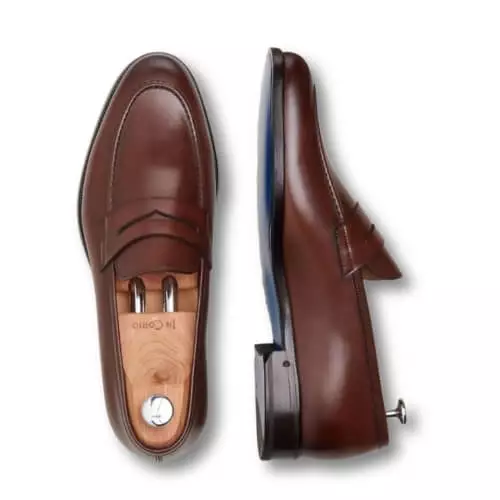
At In Corio, we offer three derbies:
- Baptiste, classic and timeless in black and chocolate leather, ideal if you're looking for a dressy pair.
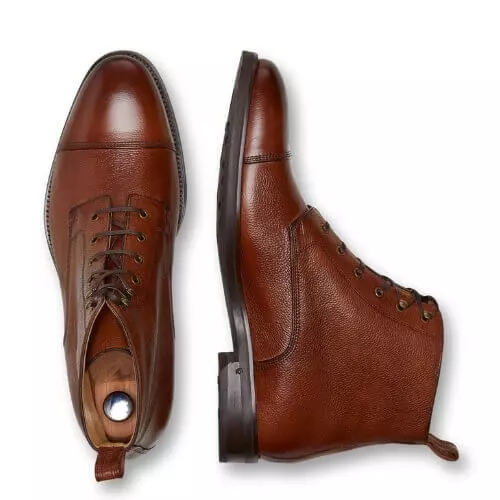
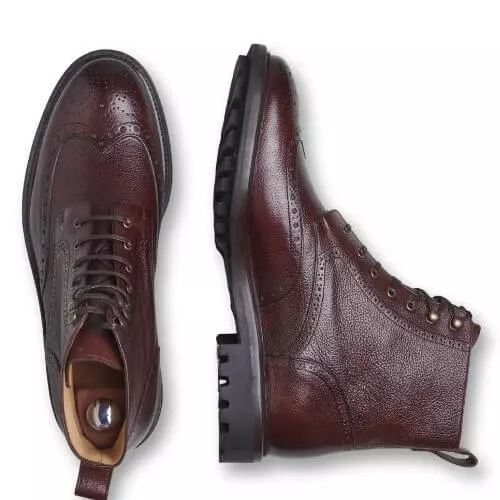
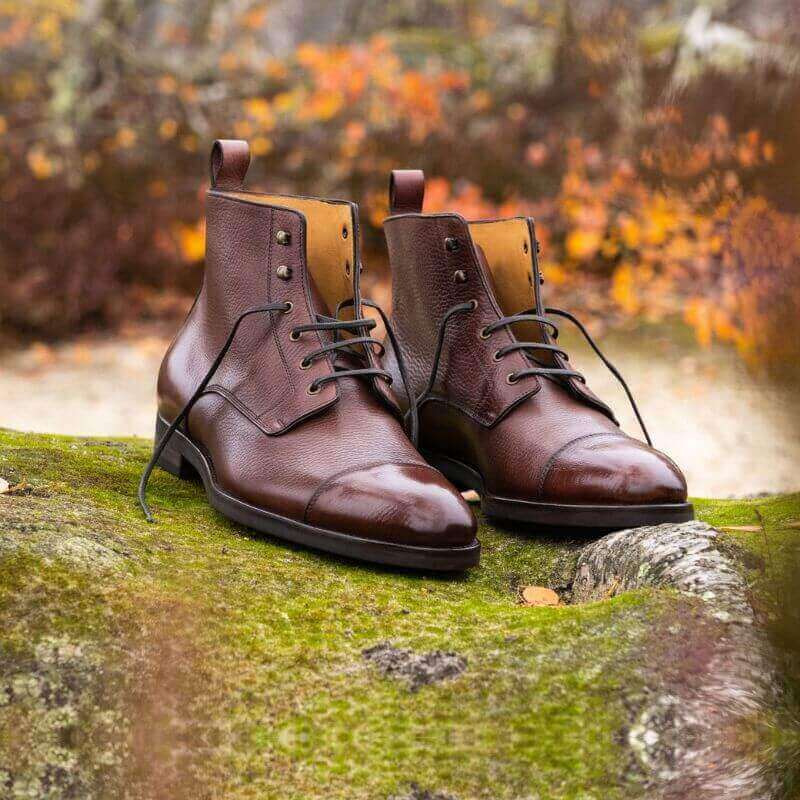
- Luc or Jules in smooth, grained or suede leather, ideal for an assertive country look with its commando sole.
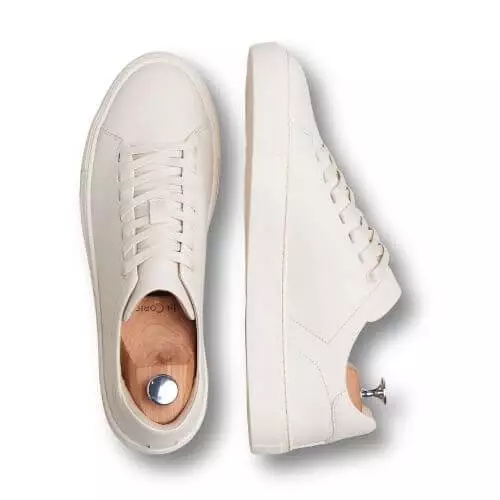
- Olivier or Jean in grained or smooth full-grain leather, which are derbies with a characterful platform, on a solid stitched rubber sole

Which trousers with derbies?
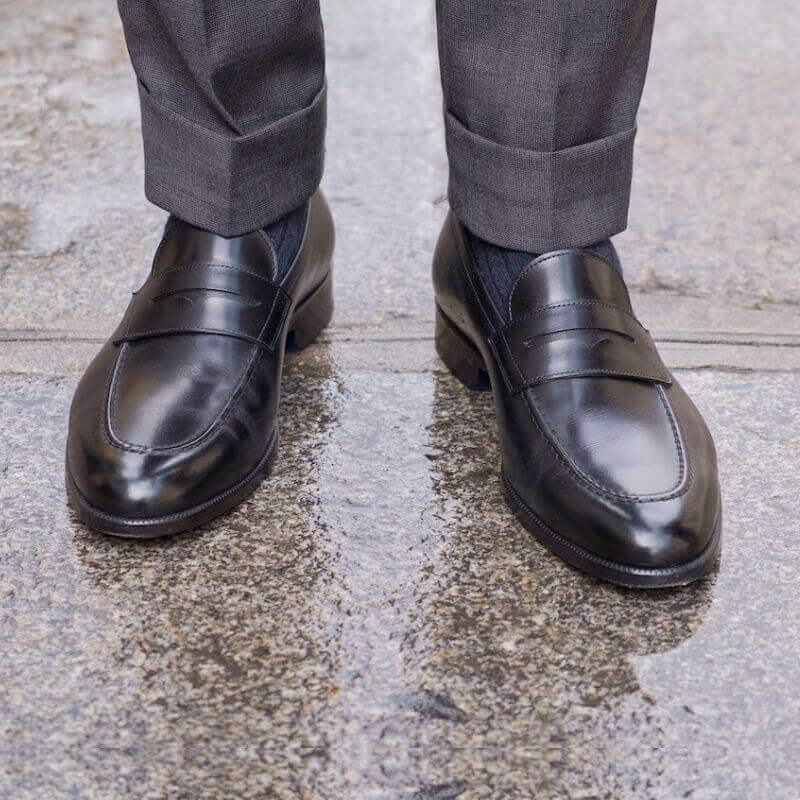
- Suit trousers or grey flannel trousers, with a black derby like Baptiste, for a sober office outfit.
- Beige or navy chinos, with a brown or cognac derby like Olivier, for everyday elegance.
- Raw denim jeans, with a grained or suede derby like Jean, for the weekend.
- Corduroy trousers and a tweed jacket, with a commando-sole derby like Luc or Jules, in homage to the gentleman farmer.
A neat hem, just brushing the top of the shoe without breaking on the vamp, shows off the line of the derby.
DERBY OR RICHELIEU? CHOOSE BOTH!
The Derby and the Richelieu both have their advantages.
It's comfort and aesthetics that will make you choose one model over the other. They even complement each other. And don't forget that from the second pair purchased at In Corio, the price is degressive. Now's the perfect time to try on one of our Richelieus and Derbys, isn't it?
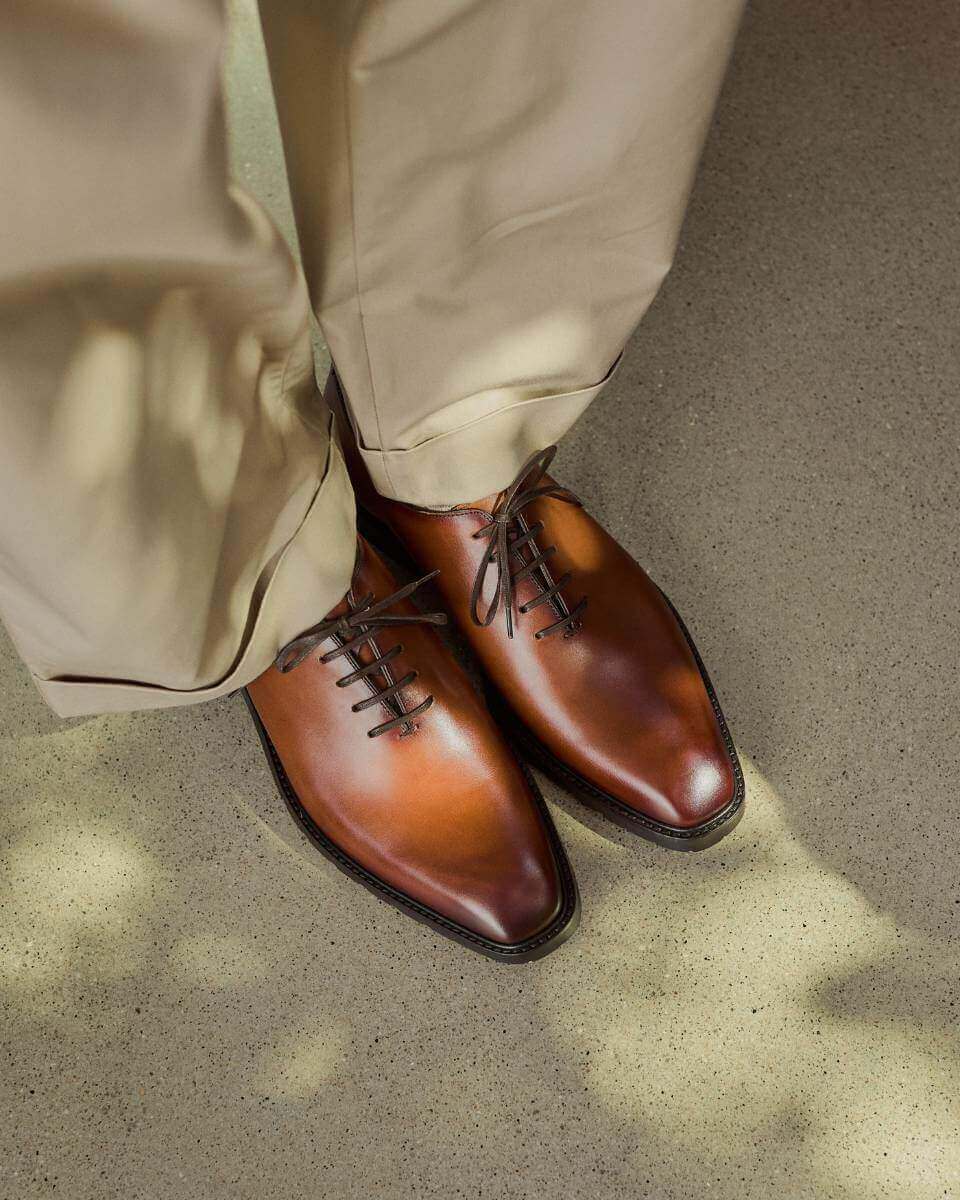
Oxford Shoes: Elegance and Expertise