

A dual definition: natural vs. artificial
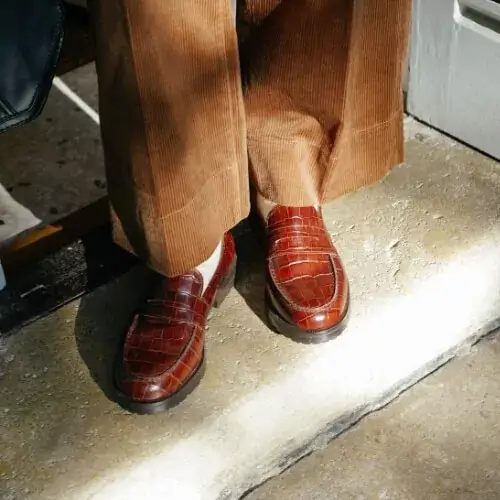
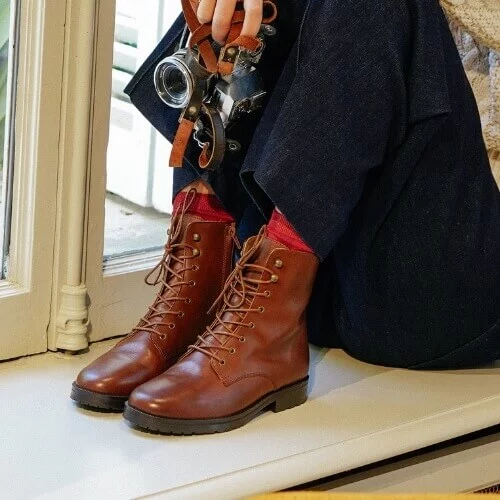
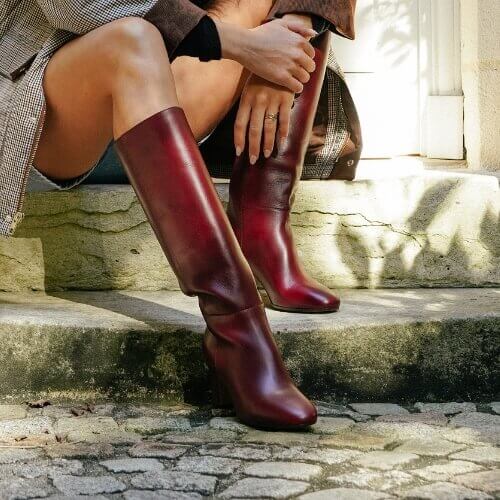
Patina is a transformation of leather that gives it a lively, almost emotional appearance. It can occur naturally, or be deliberately induced by craftsmanship.
Natural patina is the fruit of time. It forms little by little, through wear and tear. Rubbing, exposure to light, contact with the skin and the elements give rise to subtle nuances in leather. Raw or lightly-treated leather then reveals all its capacity to age elegantly, as is the case with certain leather goods or shoes worn on a daily basis. This patina tells a story: your story.
Artificial patina, on the other hand, is the result of a masterful gesture. It consists of applying layers of stain, cream or wax by hand to create a personalized visual effect. Every gesture counts: brush, sponge or even palm of the hand, all become tools to shape the color. The result? A shoe that becomes unique, at the crossroads of art and technique.
Why is patina so important?
Firstly, for its aesthetic appeal. A well-executed patina gives a pair of shoes incomparable cachet. It evokes refinement, maturity and, above all, reflects the wearer's personality.
But it's also a guarantee of craftsmanship. The patina is never exactly the same from one pair to the next: each piece is the fruit of a unique gesture. This singular aspect reinforces the shoe's emotional value, far beyond its primary function.
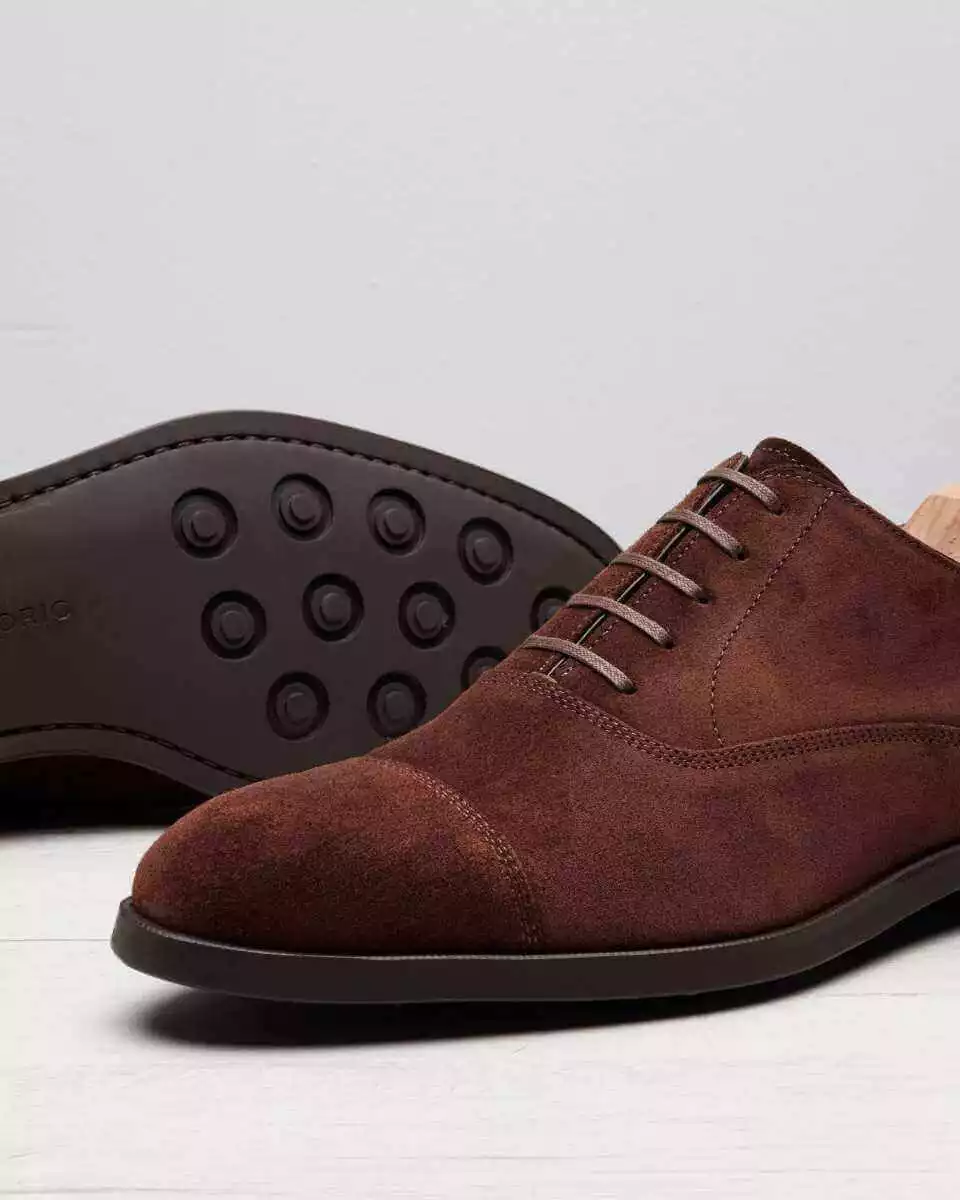
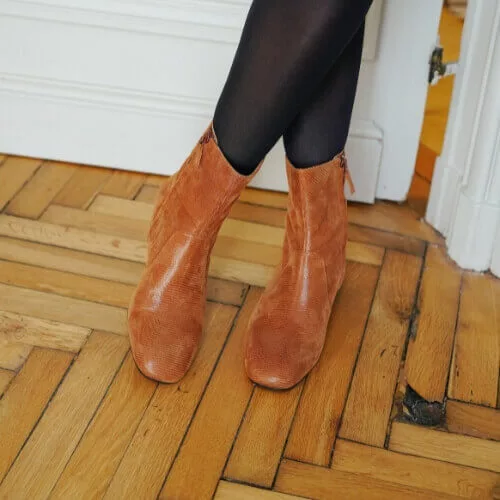
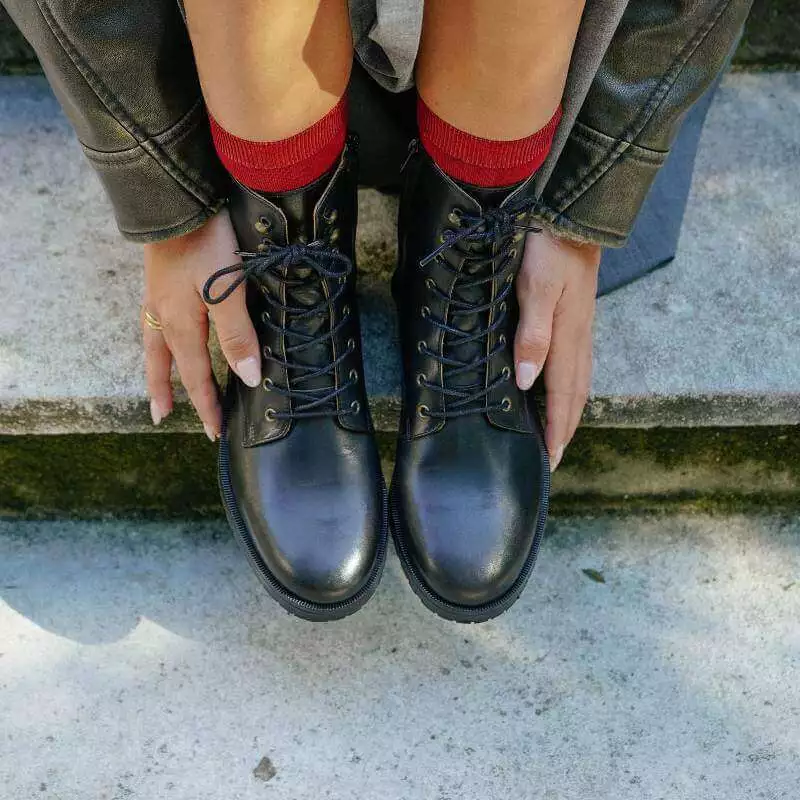
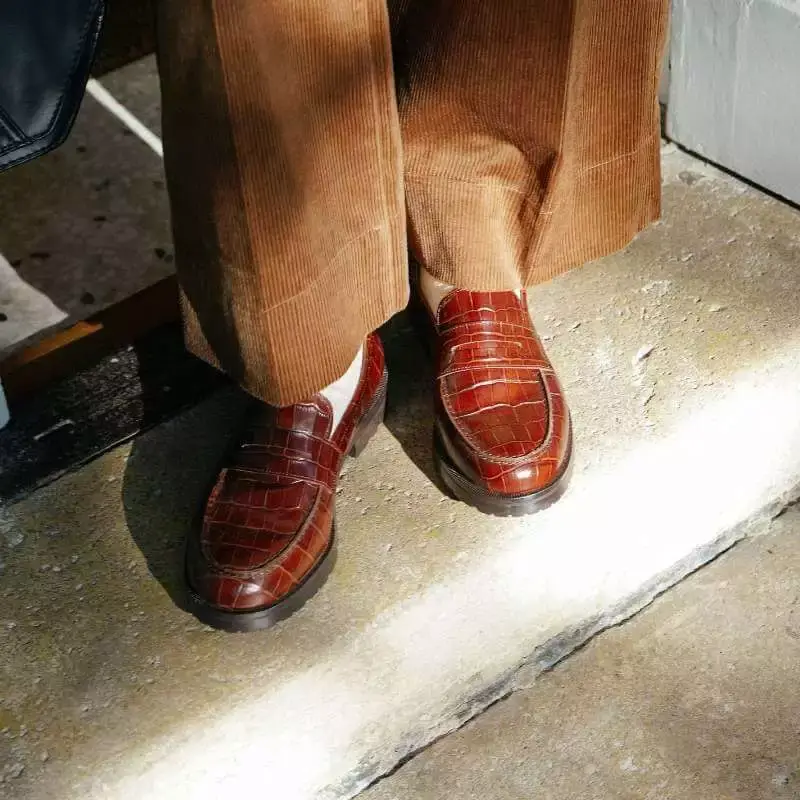
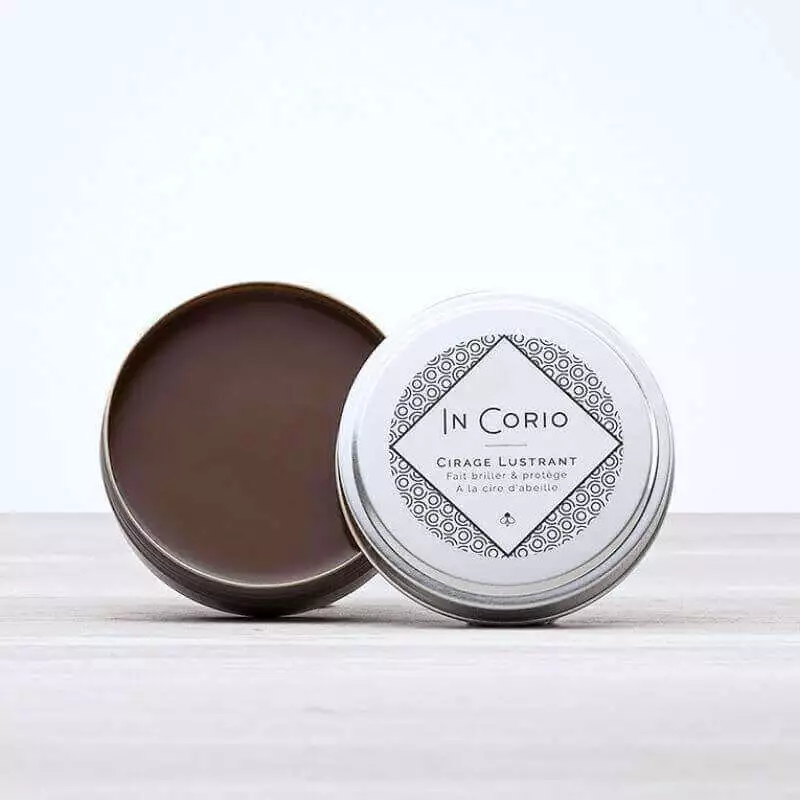
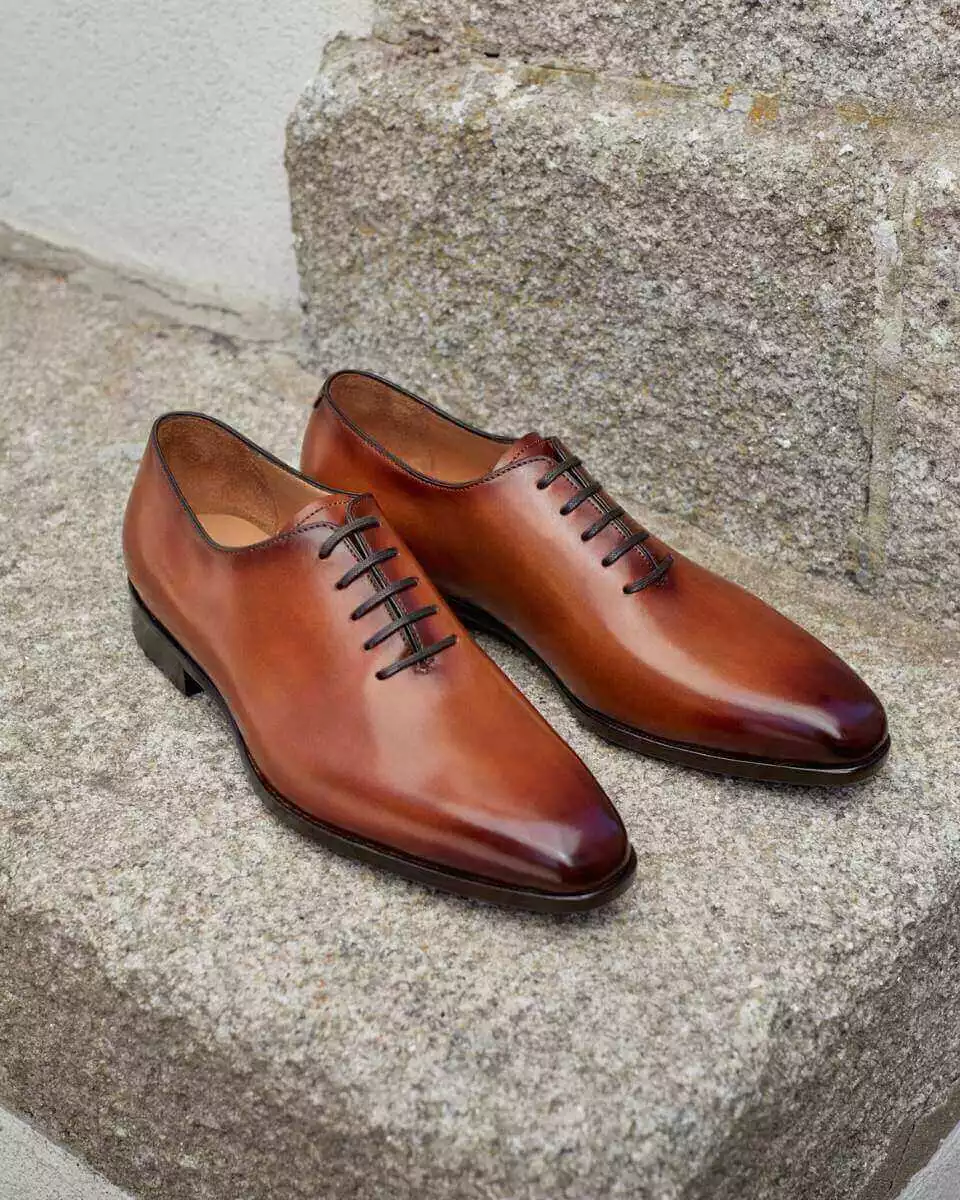
At In Corio, we celebrate this subtle art, favoring full-grain leathers capable of sublimating every nuance, every variation. All our shoe leathers are hand-finished with beeswax-enriched polishes to start a subtle patina that will embellish with you over time. This is particularly noticeable on full-grain cognac and grained leathers.
Classic or uniform patina
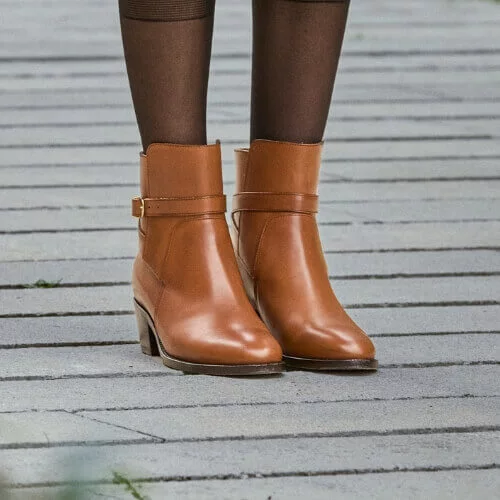
The uniform patina is the most discreet. It dresses the shoe in a uniform hue, with no marked variations. This style favors sobriety and subtlety, perfect for those seeking controlled elegance without ostentation. The result evokes a well-maintained natural patina, often in warm, timeless brown or cognac tones.
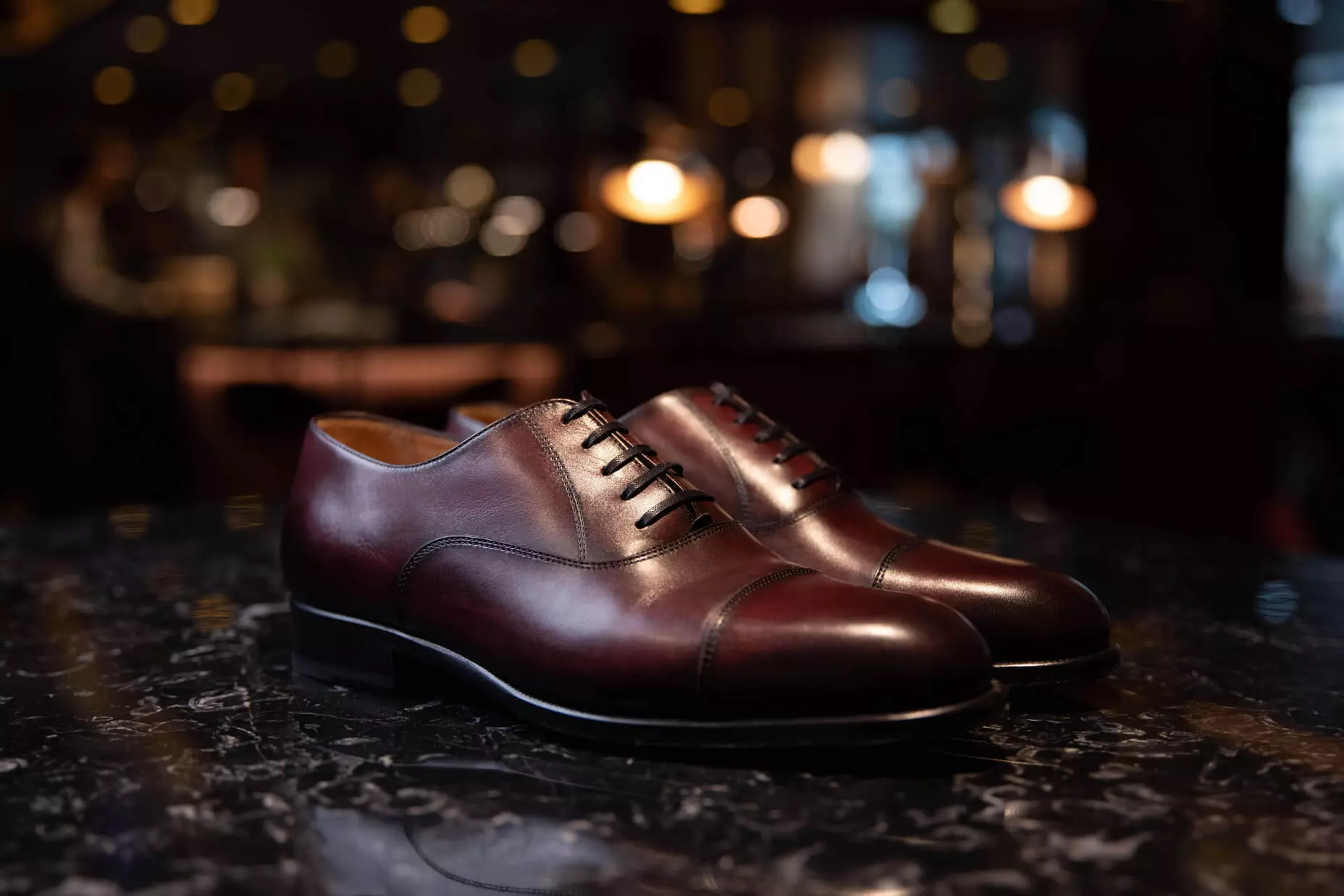
Contrasting or gradient patina
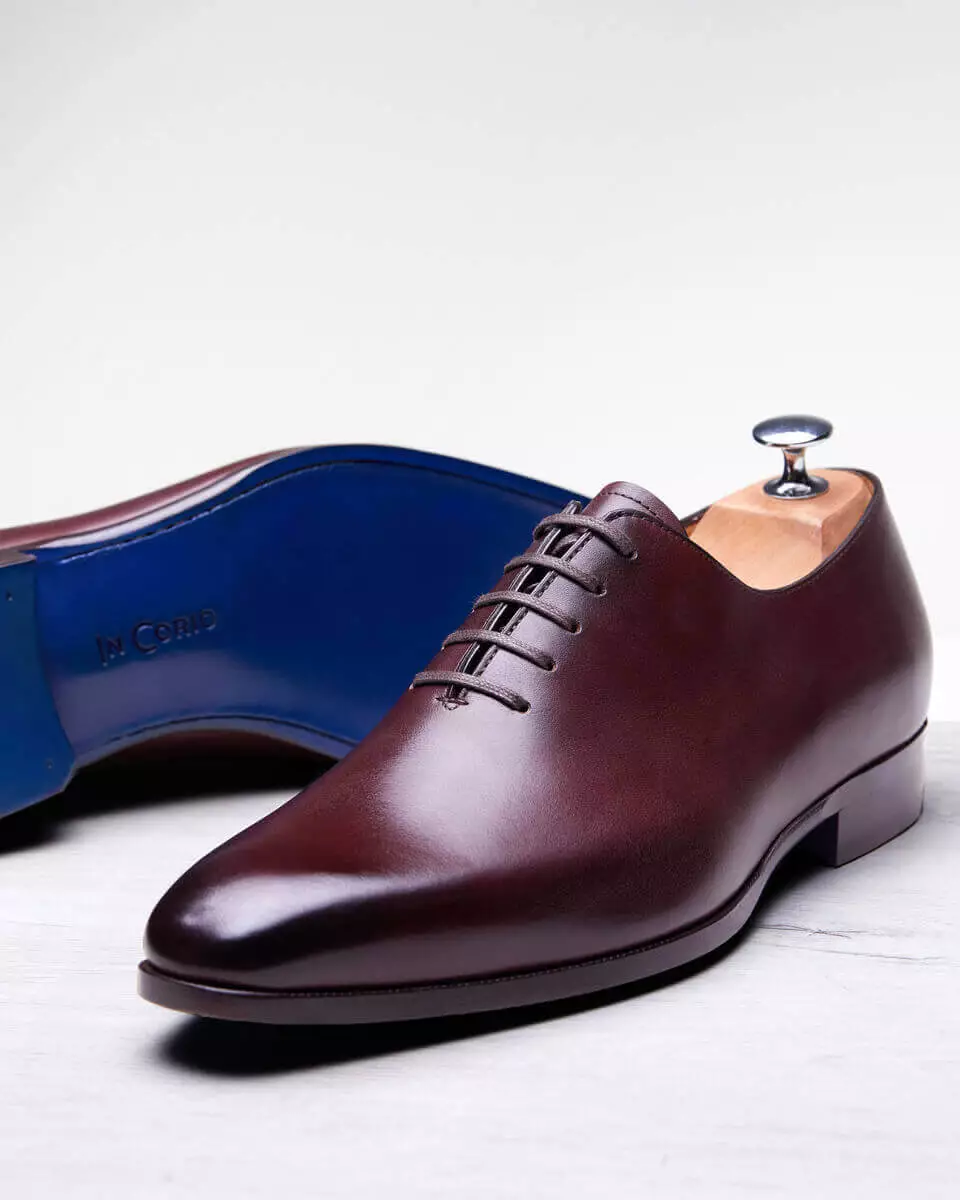
Here, leather becomes a field of contrasts, between light and dark. Gradients are worked to create relief: a dark toe cap, a lighter vamp, an emphasized arch. This patina style highlights the structure of the shoe, emphasizes the lines, and gives depth and character to the whole. It's a balance between discretion and originality. We regularly create limited-edition shoes with this type of artisan patina, as we did recently with Monsieur M and our burgundy and blue patinas.
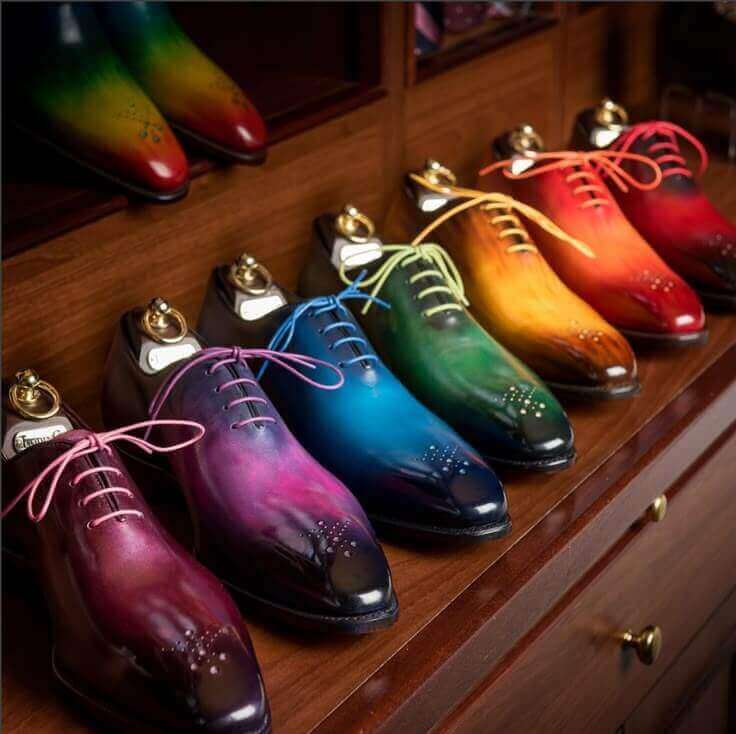
Figure skating
For the more daring, patina becomes a veritable exercise in style. Wood effect, marbled, flamed... nuances are superimposed, textures are revealed.
This patina uses mixed techniques: fine brushes, sponges and circular hand movements. It is inspired in particular by museum calf - a richly shaded leather - or by custom glazing, which adds a glossy finish to certain elements such as the tip or bail.
The attached example shows just how infinite the possibilities are, even if they often fall short of the understated elegance so dear to In Corio :)
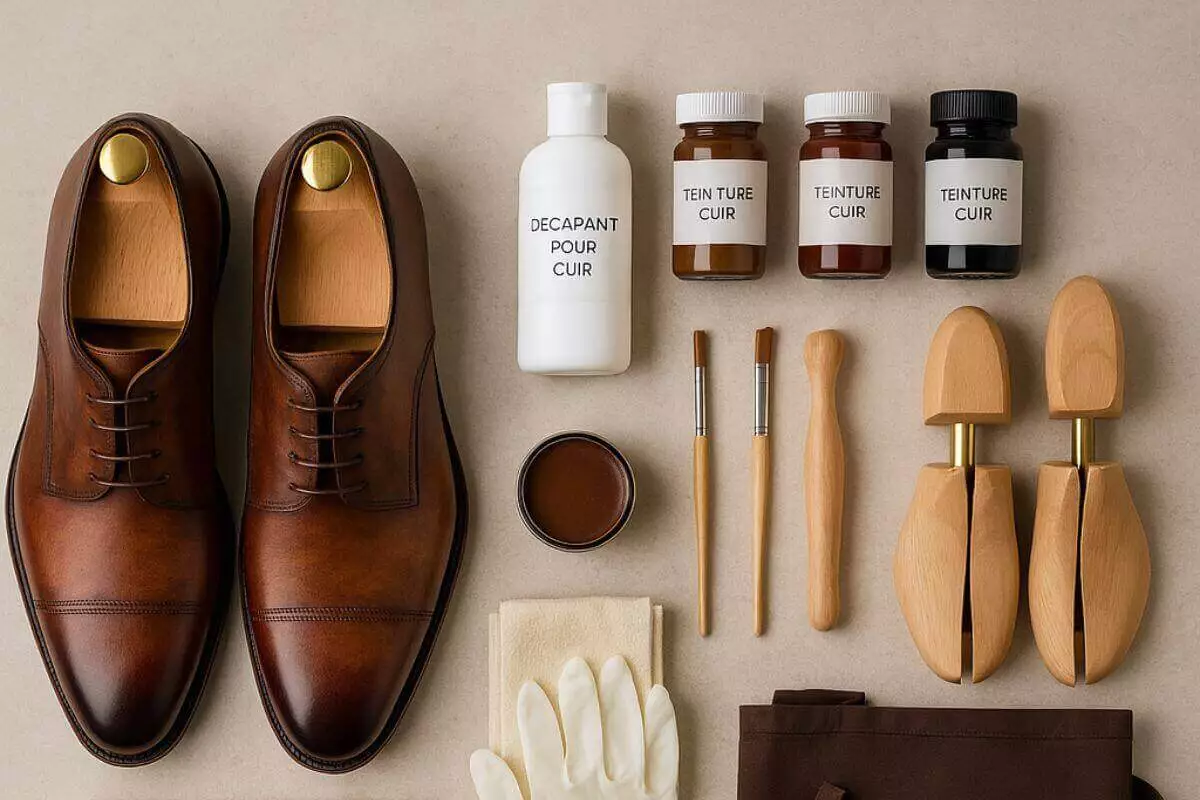
Materials required
Before getting started, it's important to gather the right equipment. Here are the essentials:
- Leather stripper
- Dyes suitable for leather
- Brushes of various sizes
- A pair of shoe trees to stabilize the shoe
- Soft cloths, nourishing cream and colored shoe polish
- A pair of gloves, an apron and, ideally, a well-ventilated space
Before any application, we recommend testing on a hidden part of the leather to observe its reaction.
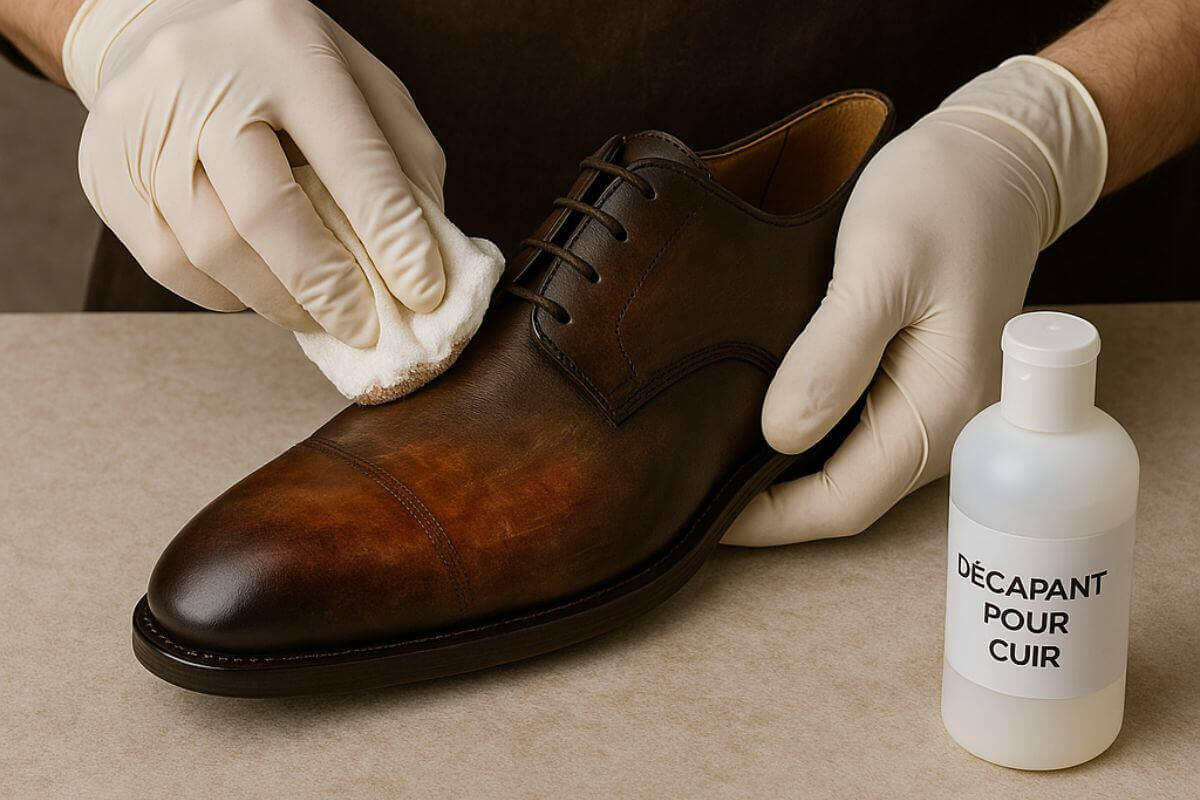
Step 1 - Stripping the leather
The first step is to remove all traces of shoe polish or cream. The aim is to expose the leather so that it can absorb the dyes evenly.
To achieve this, use a specific stripper or, with caution, a light solution of acetone. Caution: these products must be handled with care, as they are too aggressive and can irreparably damage the leather.
Slow progress is essential. Once stripped, leather becomes more vulnerable. So avoid saturating the material and preserve its suppleness.
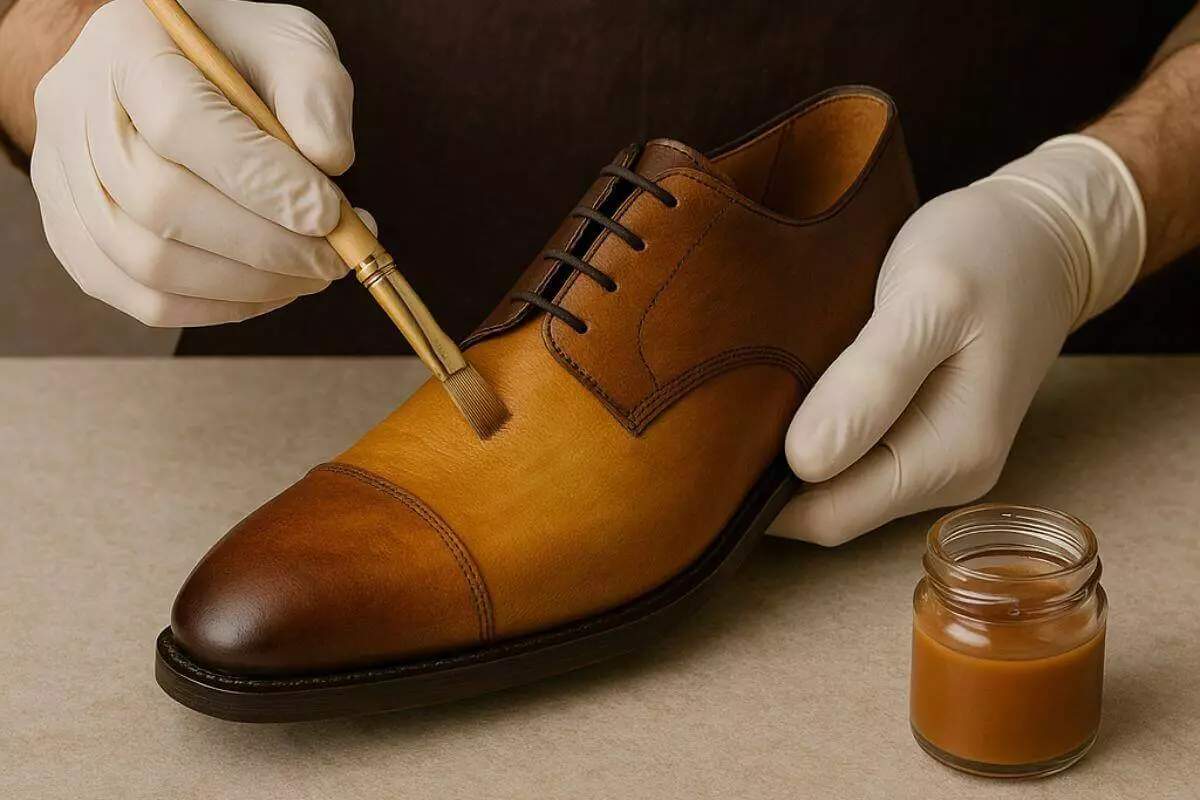
Step 2 - Applying the base shade
Next comes the application of the first shade. A light color is chosen as the base for subsequent effects.
Apply with a brush, avoiding repeated strokes over the same area to avoid streaking or overloading. Once applied, allow to dry completely.
This base can be intensified by superimposing several thin coats, each properly dried. This creates the depth essential to a successful patina.
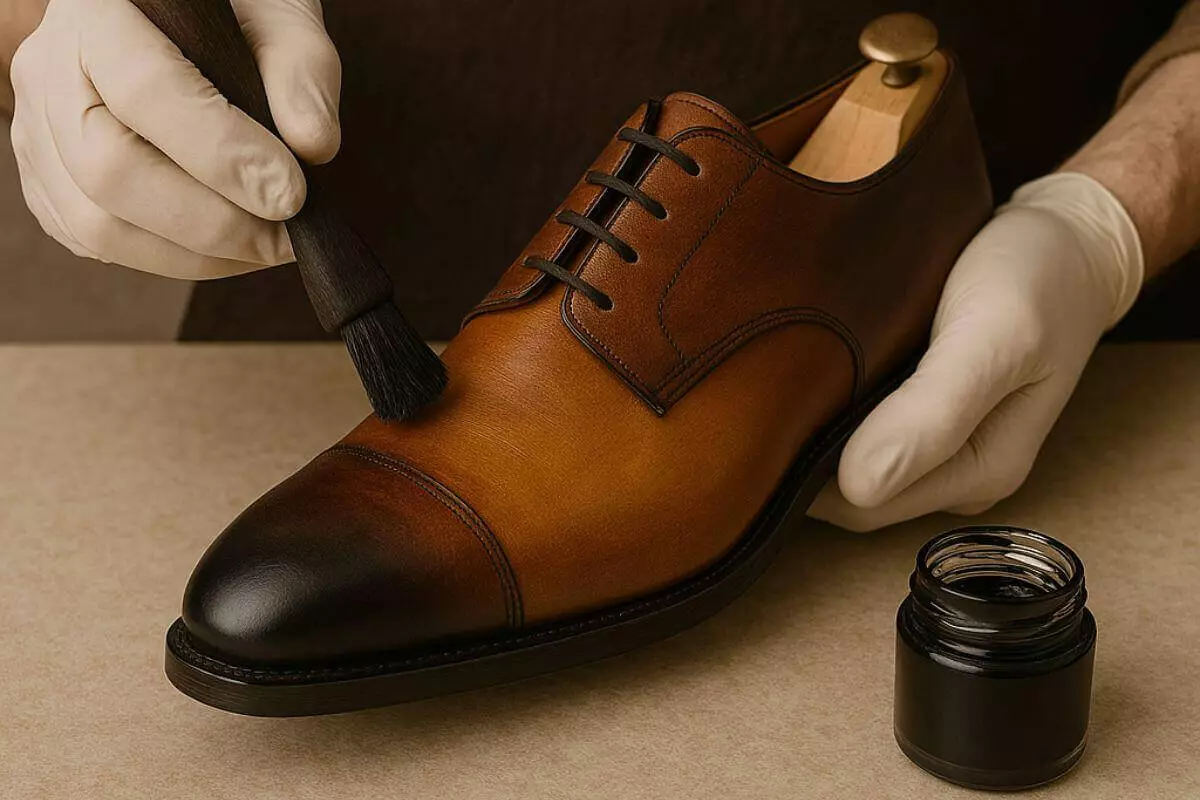
Step 3 - Shading
This is where art comes in. By playing with shadows and contrasts, we can create an effect of relief and life.
You can :
- Blacken the toe of the shoe for a “spazzolato” effect
- Reinforce the seams or arch
- Add artistic effects such as marbling or a wood effect
Tools vary: a hard brush for a ribbed effect, a sponge to blend the colors or even the hand for softer transitions.
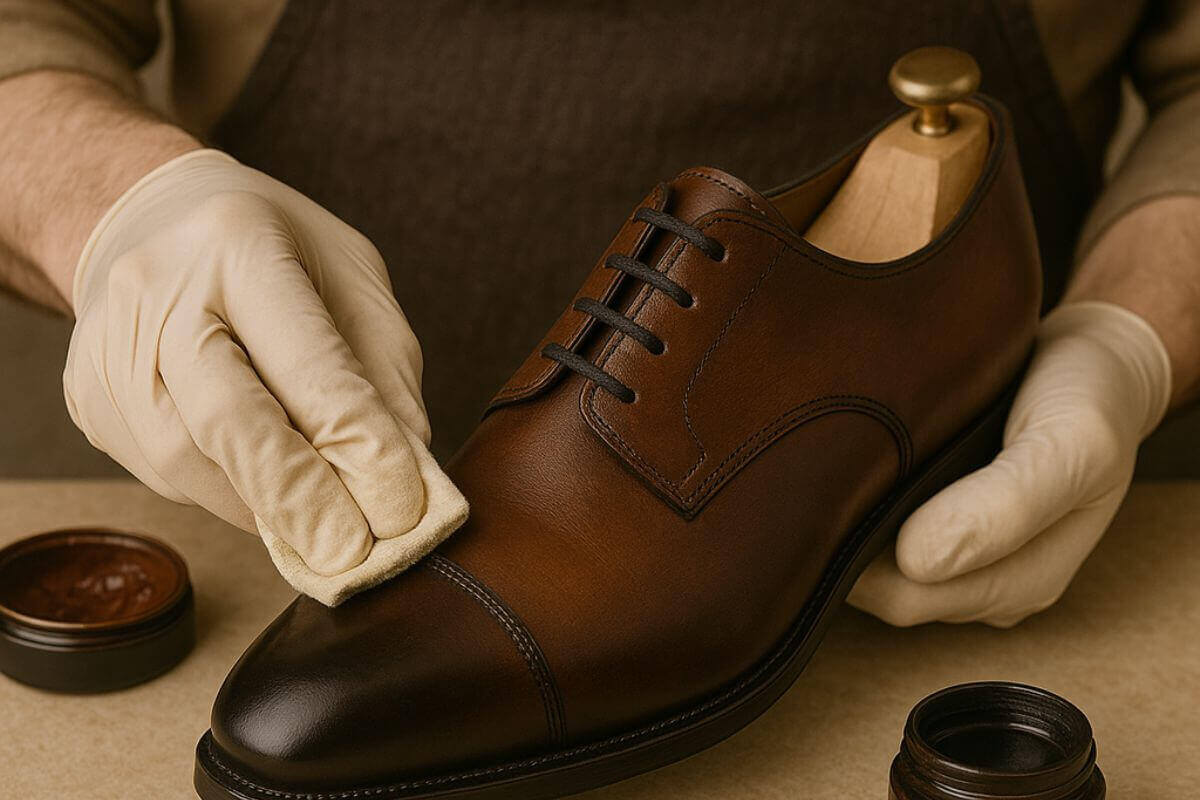
Step 4 - Fix the patina and sublimate
Once the color and effects are in place, it's time to nourish and protect the leather. A tinted cream is applied to moisturize and set the color.
Next comes shoe polish, often lightly colored, to add depth and shine. For a mirror-like finish on the toe or garments, a glaze can be applied. This is a technique in its own right, combining wax, water and dexterity.
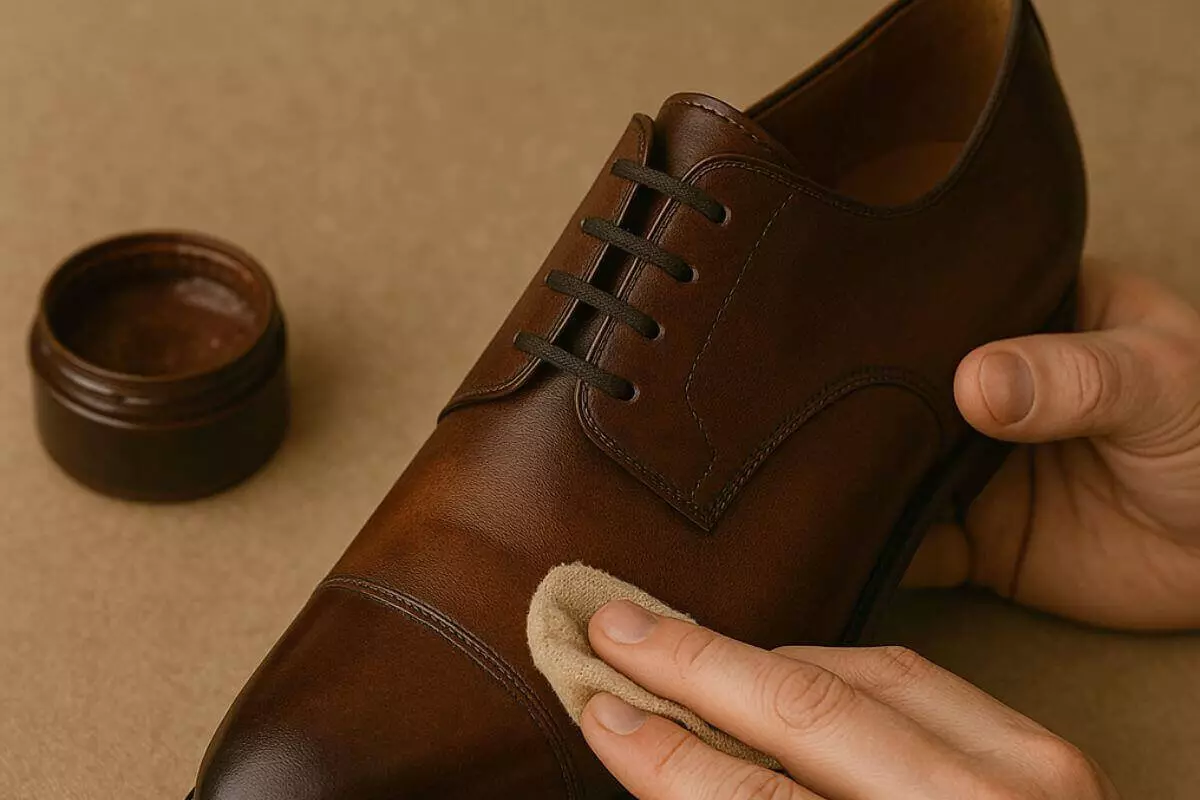
Step 5 - Maintaining the patina over time
A patina requires gentle care. It is important to:
- Use tinted nourishing creams adapted to the color of the leather
- Avoid frequent use of colorless products, which can dull the shades
- Clean gently with a soft cloth
Moisturize regularly to keep the leather supple and shiny
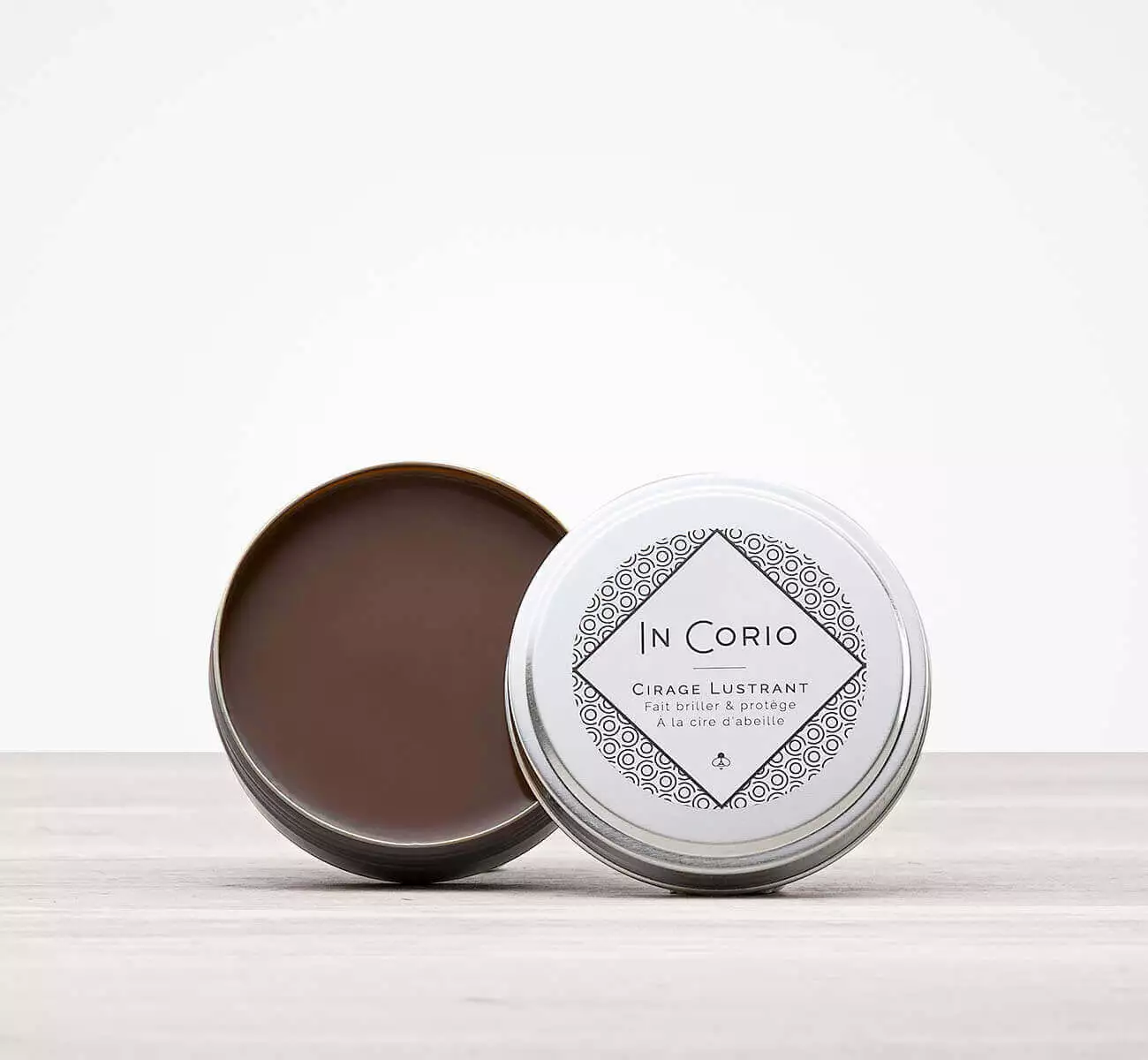
For those who wish to take up the art of patination, the choice of products is essential. Some of the leading names in leather care are Saphir, Avel, Famaco and Fiebing's. The In Corio leather care range is also ideal for creating a patina on your leather shoes.
The essential products:
- A dye adapted to the porosity of the leather
- A gentle stripper to prepare the material
- A nourishing tinted cream to fix and moisturize
- A colored shoe polish to protect and sublimate
You'll find them in specialized shoe shops, or via websites dedicated to leather care.
Always take the time to read the recommendations for use: a good product, properly applied, makes all the difference.
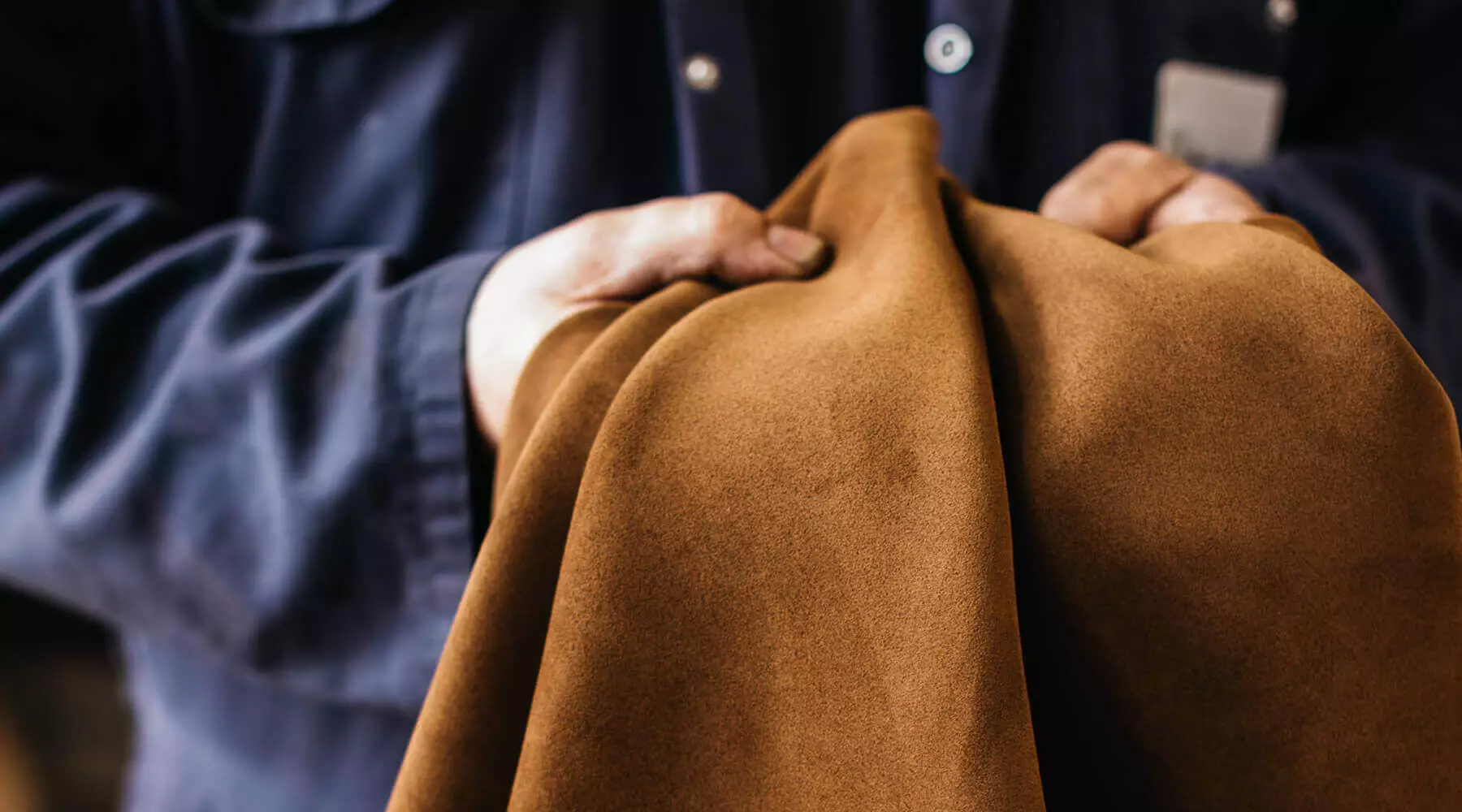
Nubuck, suede, or velvet leather: what's the difference?