

Differences between suede, nubuck, and velour leather
Suede, nubuck, velour leather… these terms often cause confusion. Yet, each name hides a specific characteristic:
- Nubuck is obtained by lightly sanding the outer side (grain side) of the leather. The result? A fine and silky texture, almost powdery. It is particularly fragile.
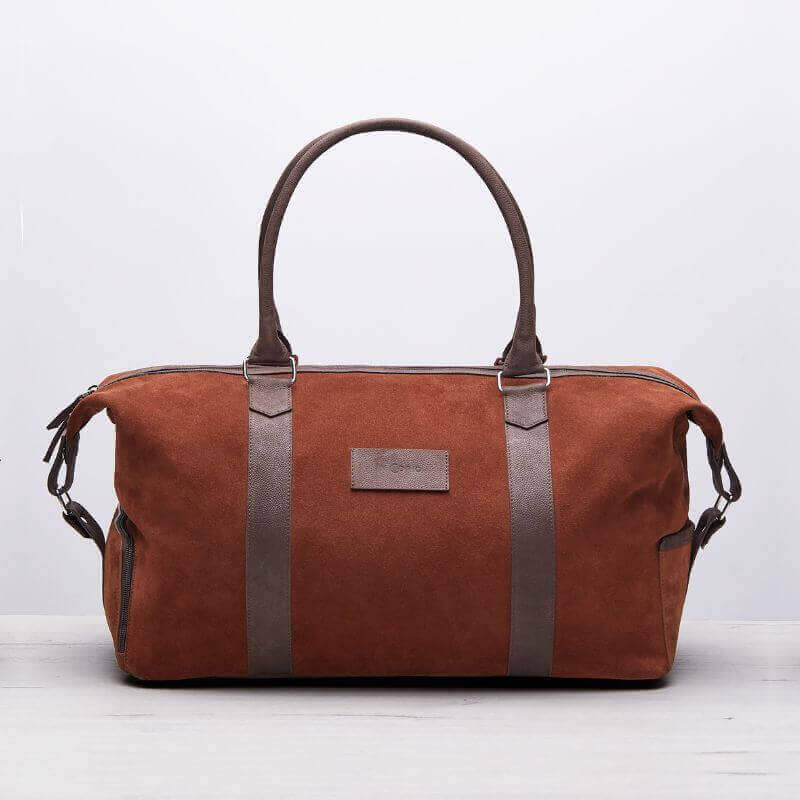
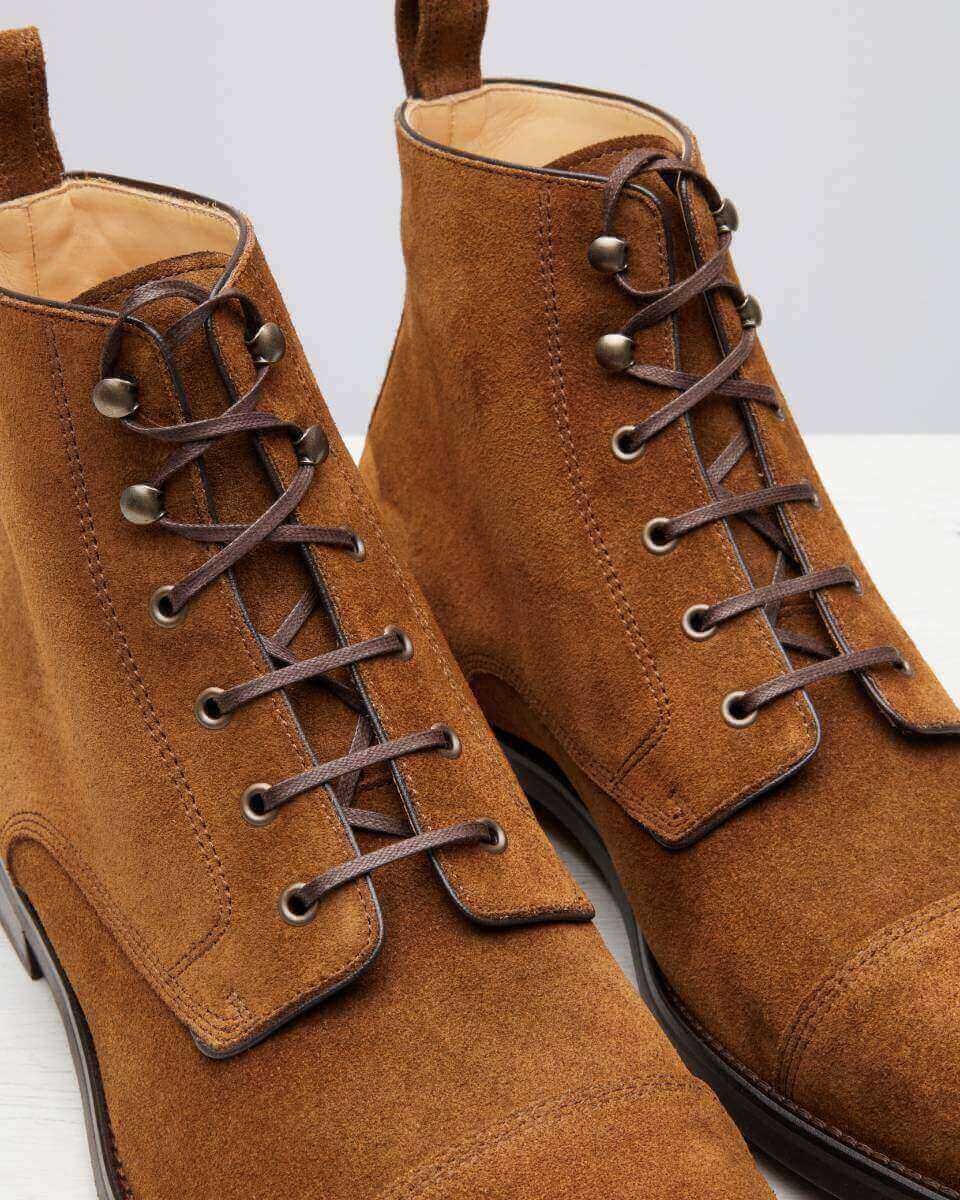
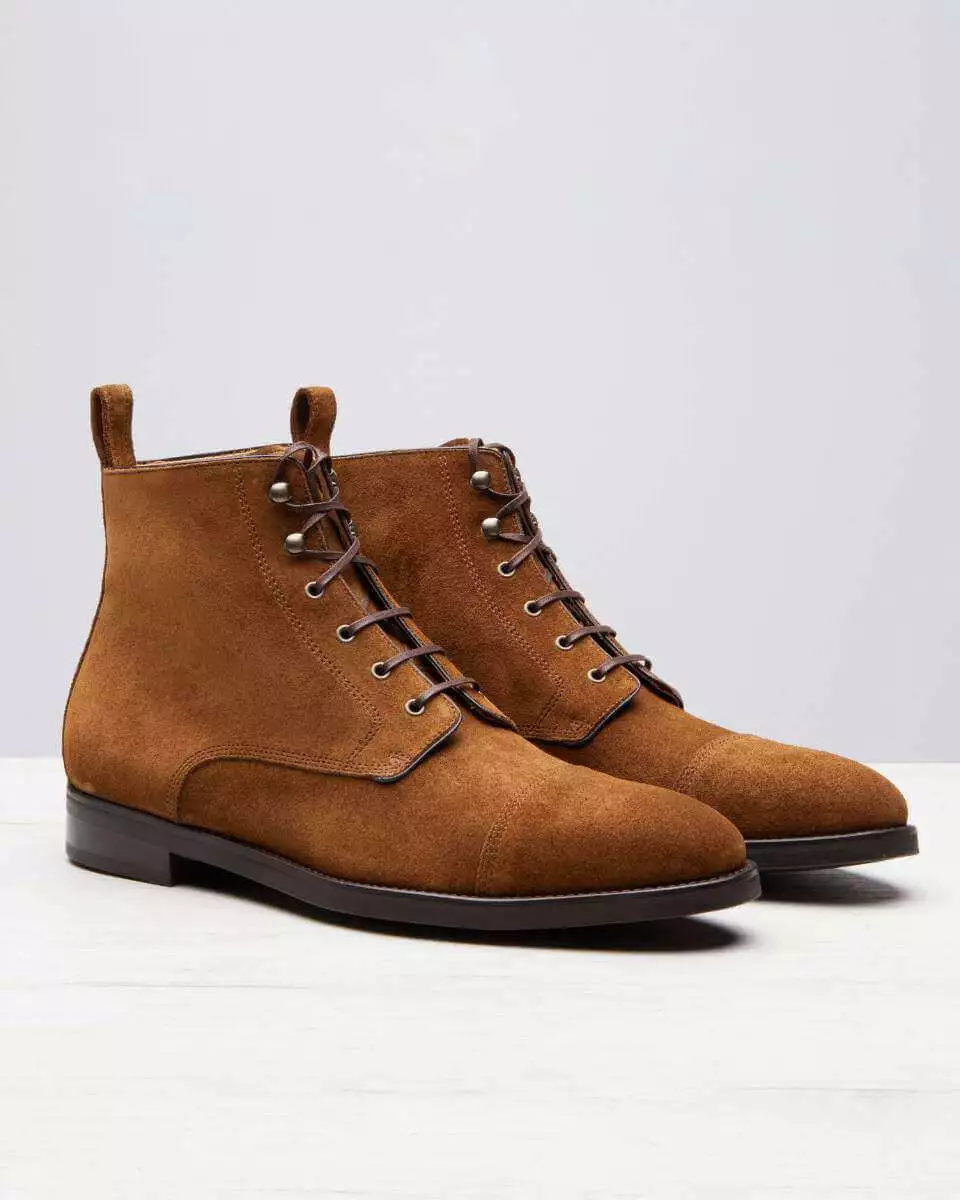
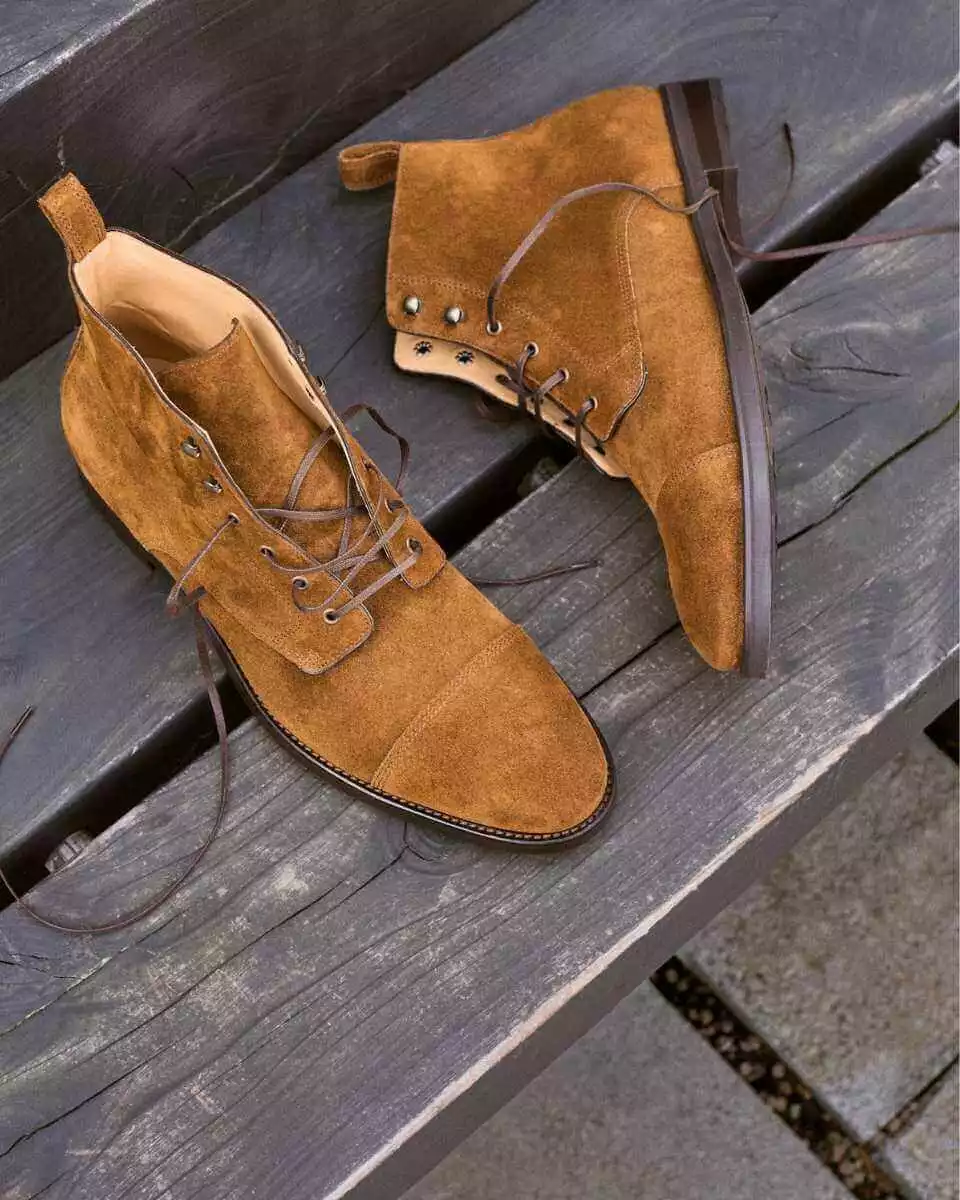
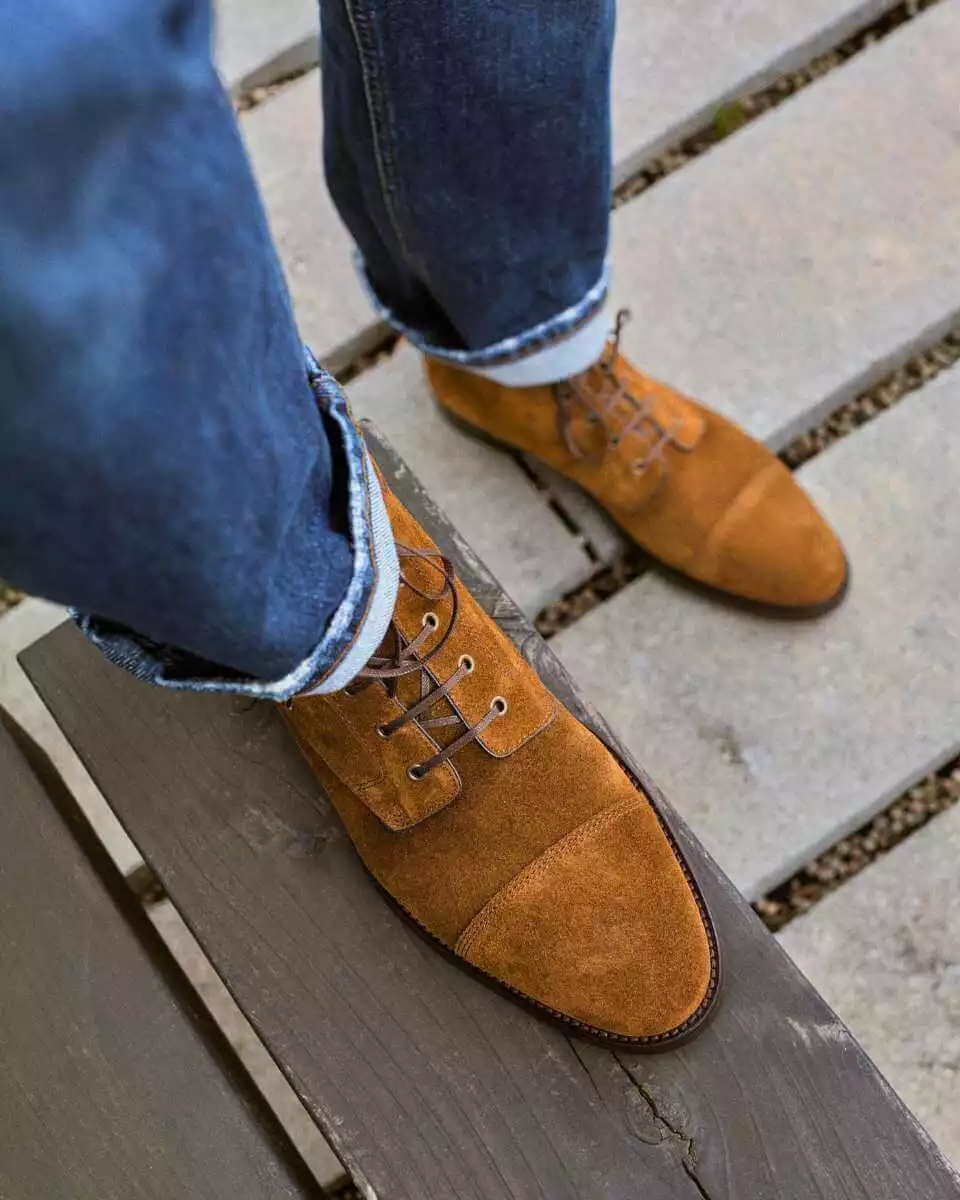
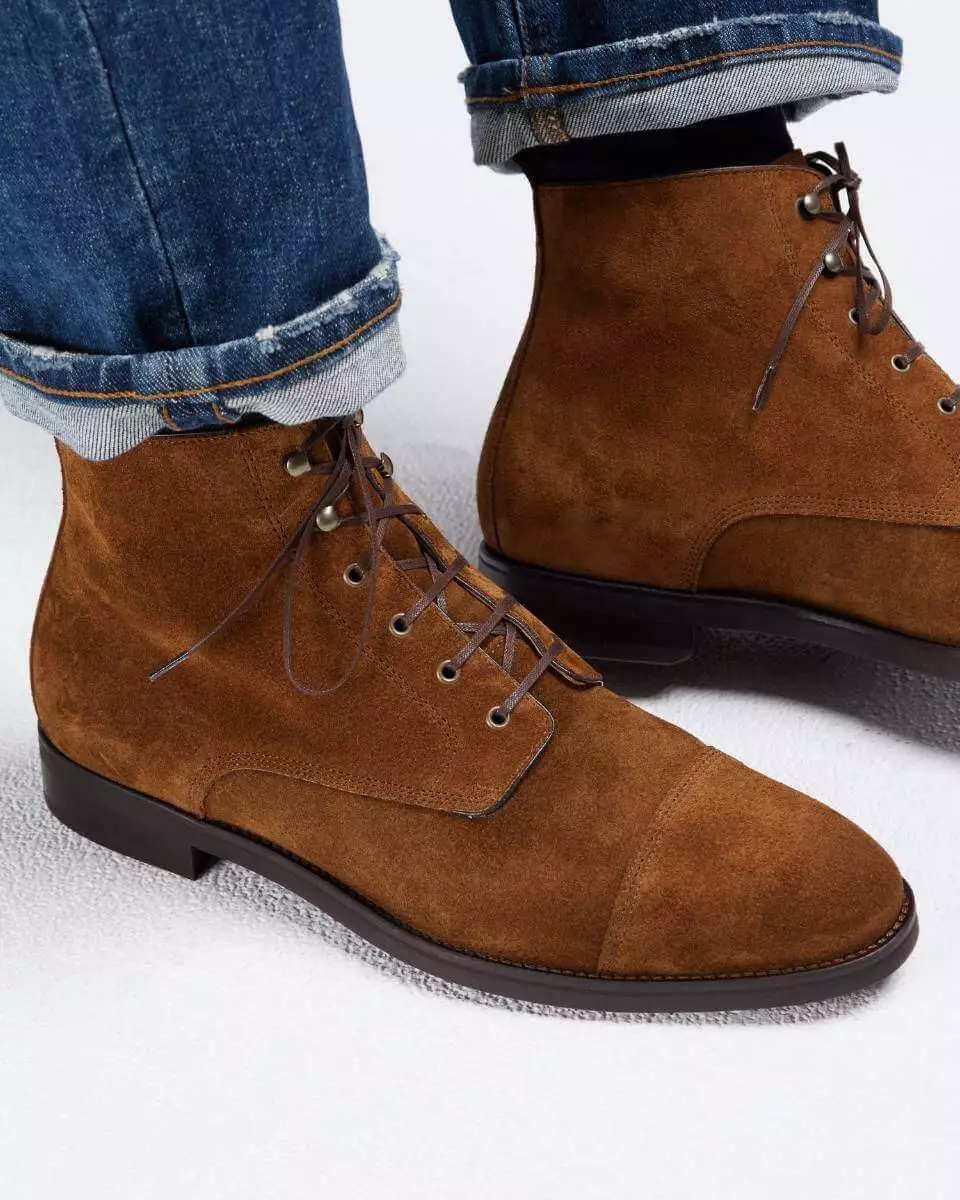
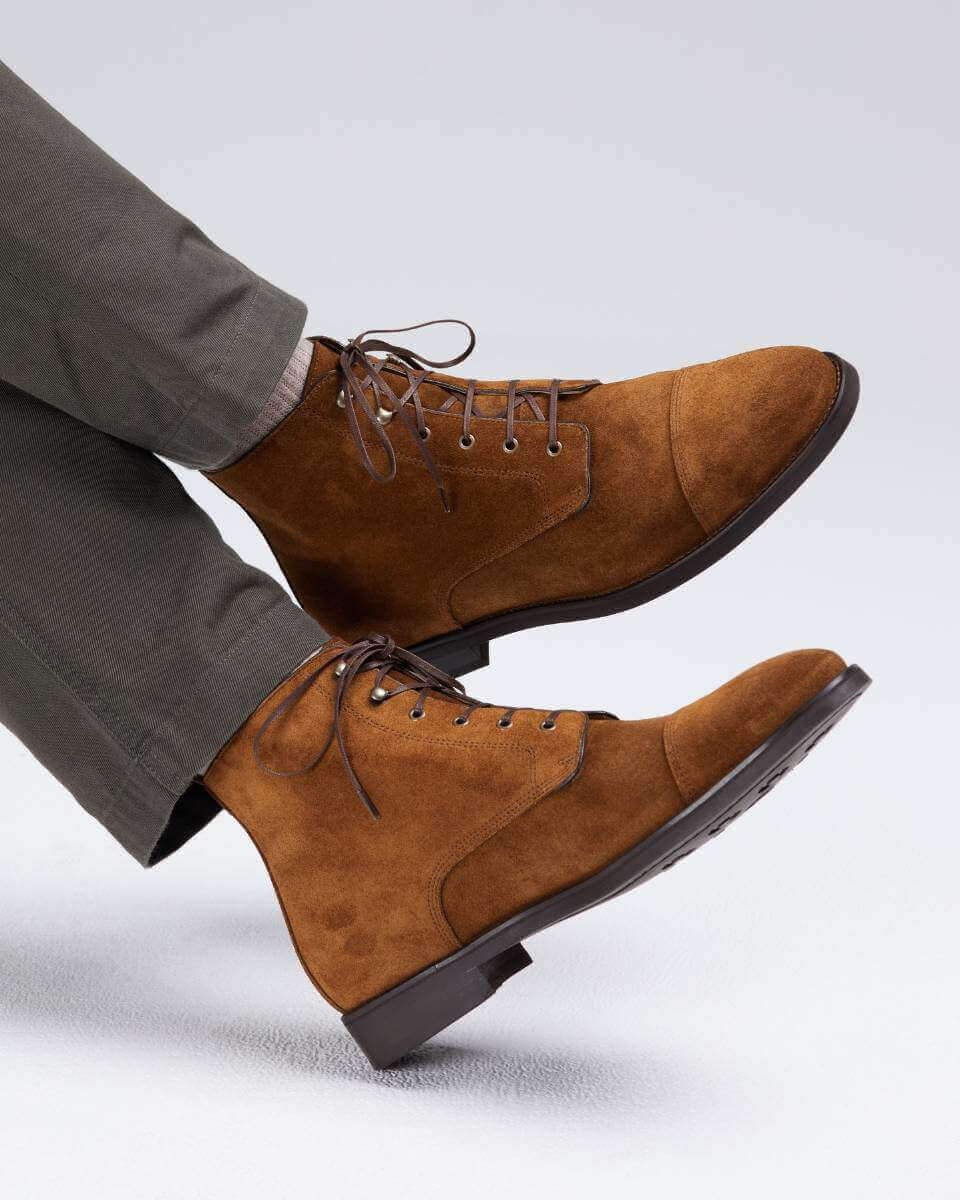
- Suede, or calf velour (as on our Martin model pictured), is sanded on the flesh side (inner side of the leather), which gives it a softer and deeper appearance, and better durability.
The term "velour leather" is sometimes used to refer to either one. Regardless of the name, the care required is very similar.
Why is this identification important?
Each leather has its own personality, and they do not all react the same way to products. A brush that is too stiff can mark nubuck, and a sponge that is too wet can stain suede. It is therefore better to adapt your technique and tools to preserve the nobility of the material.
Step 1 – Preparation
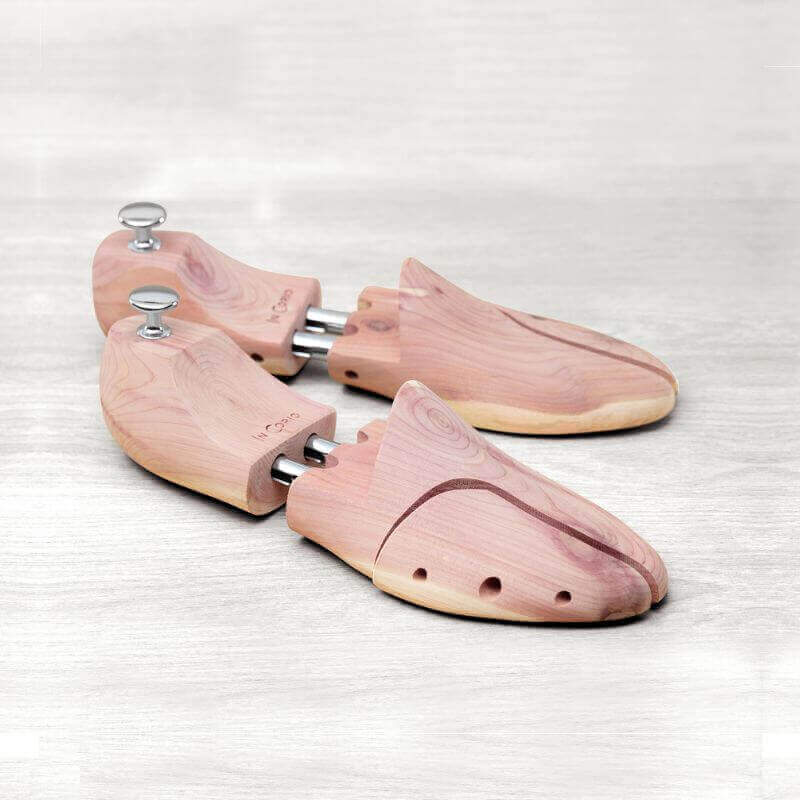
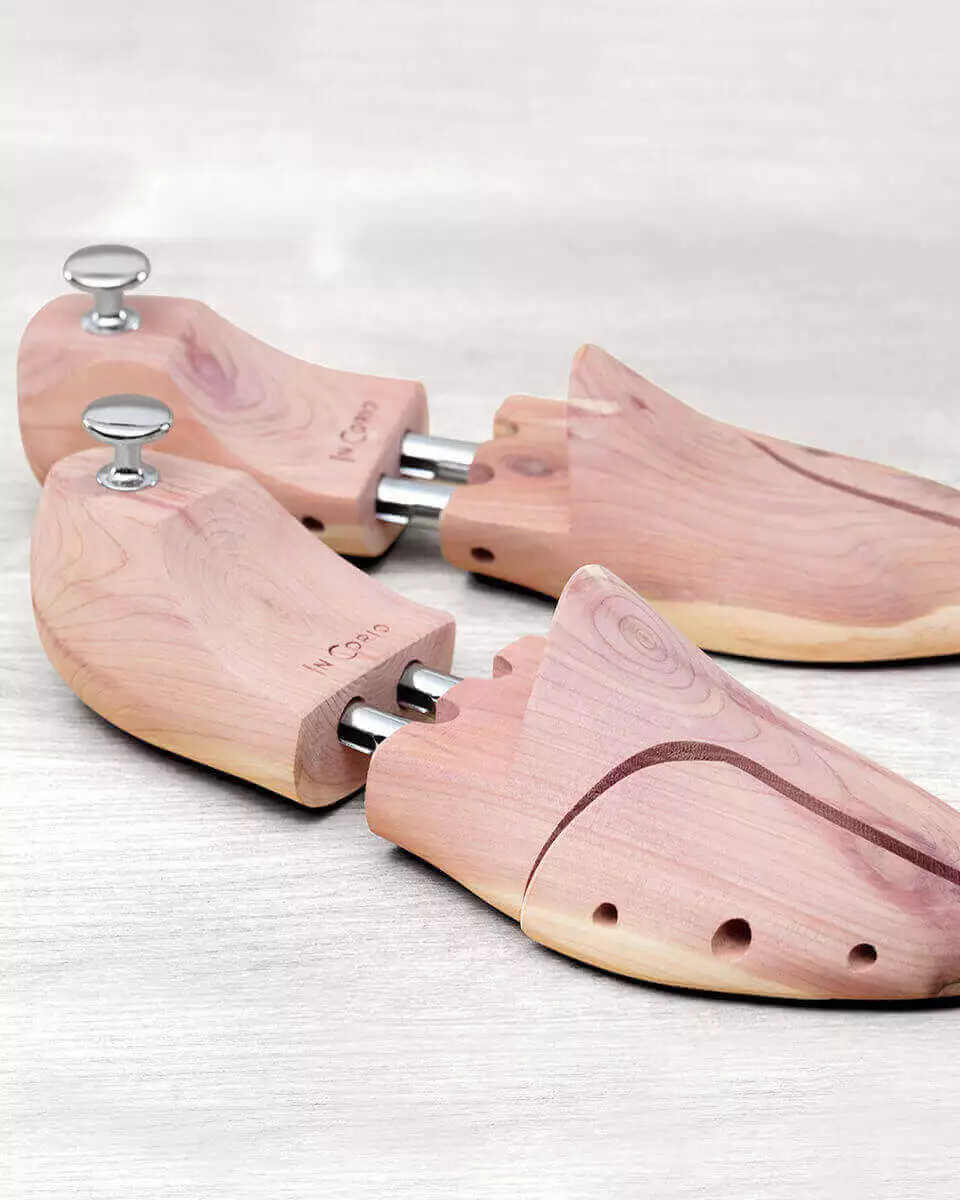
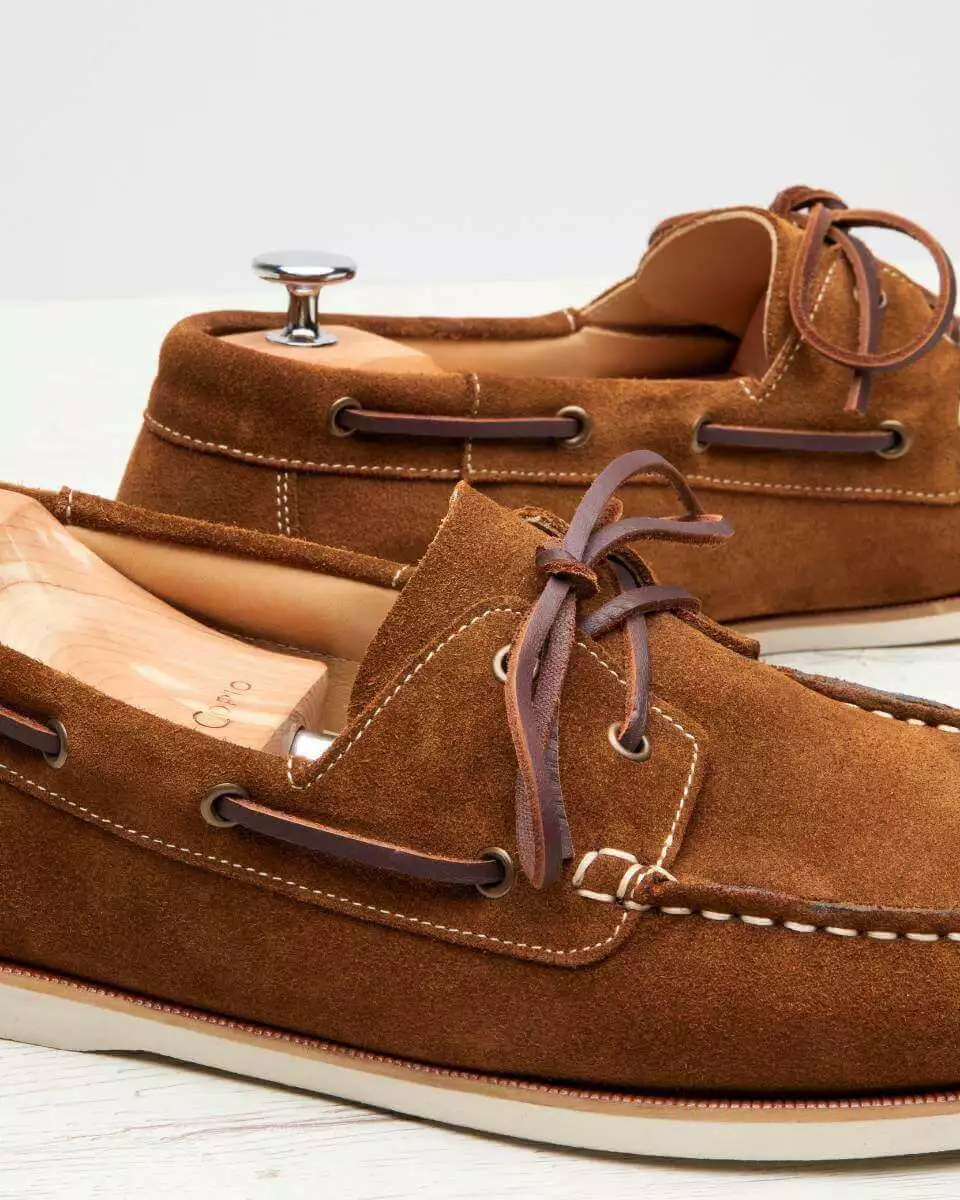
Before starting, remove the laces to fully clear the upper. Then insert raw wooden shoe trees (cedar ideally) into your shoes: they ensure optimal shape support and absorb accumulated moisture. This simple step prepares your shoes for effective cleaning while preventing unsightly creases.
Step 2 – Dusting
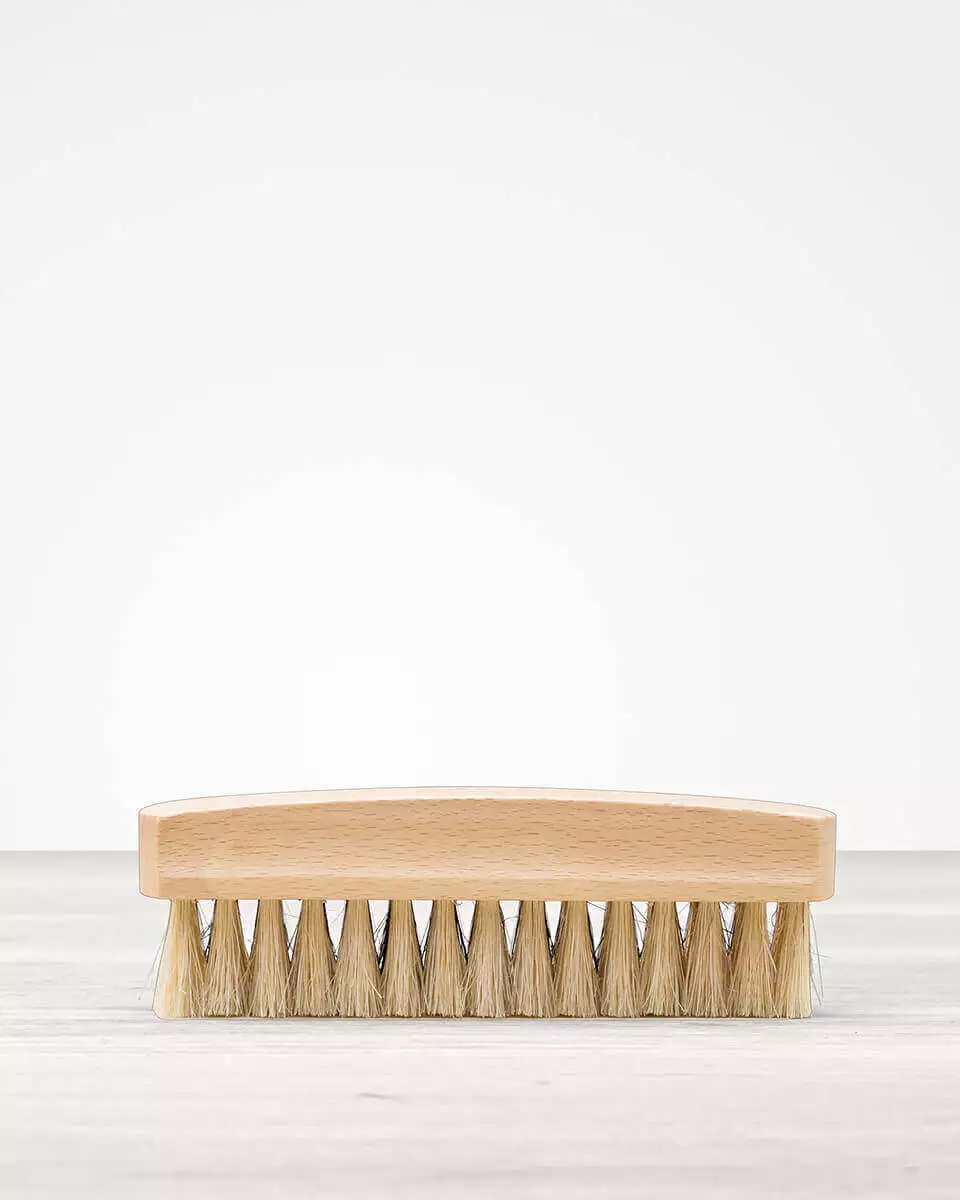
A light but regular brushing is often enough to maintain your suede or nubuck shoes. Use a natural bristle brush, such as horsehair, and brush gently in the direction of the nap to avoid "polishing" the material. The goal is to remove surface dust and dirt without damaging the leather. In case of ingrained stains, it’s better to wait for the next step.
Step 3 – Gentle cleaning
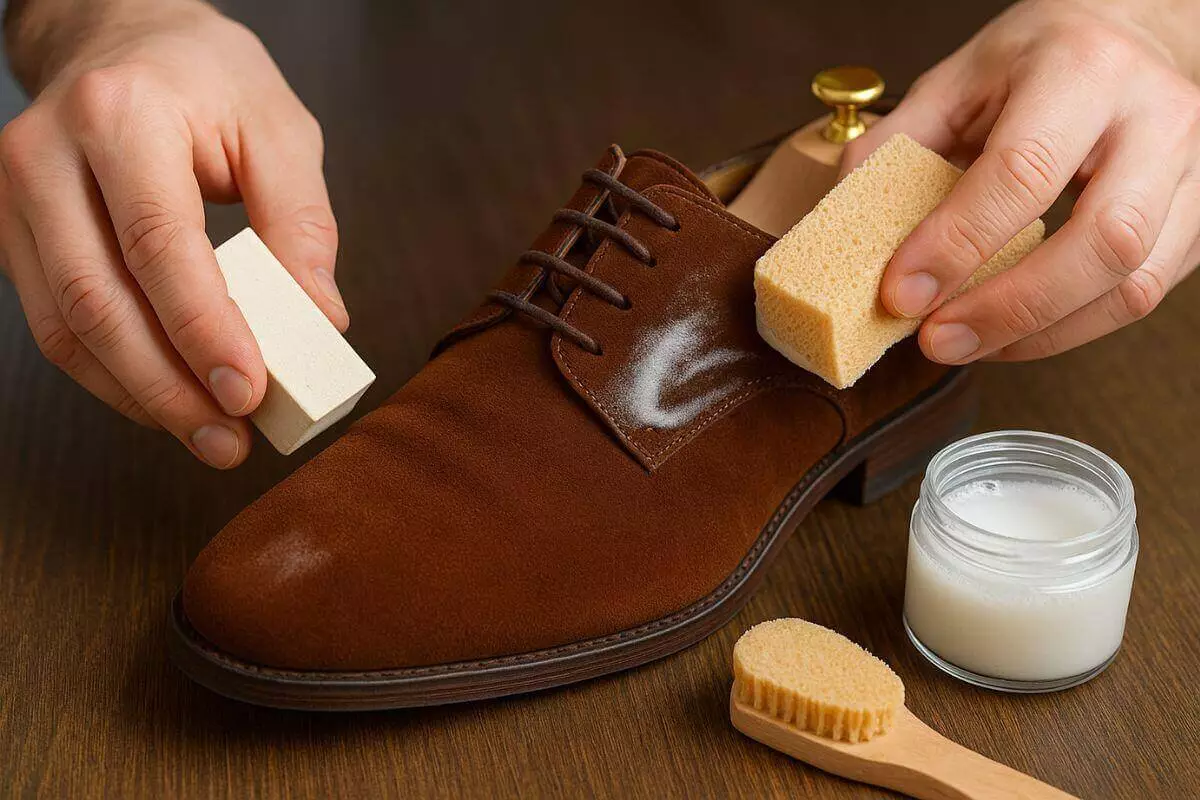
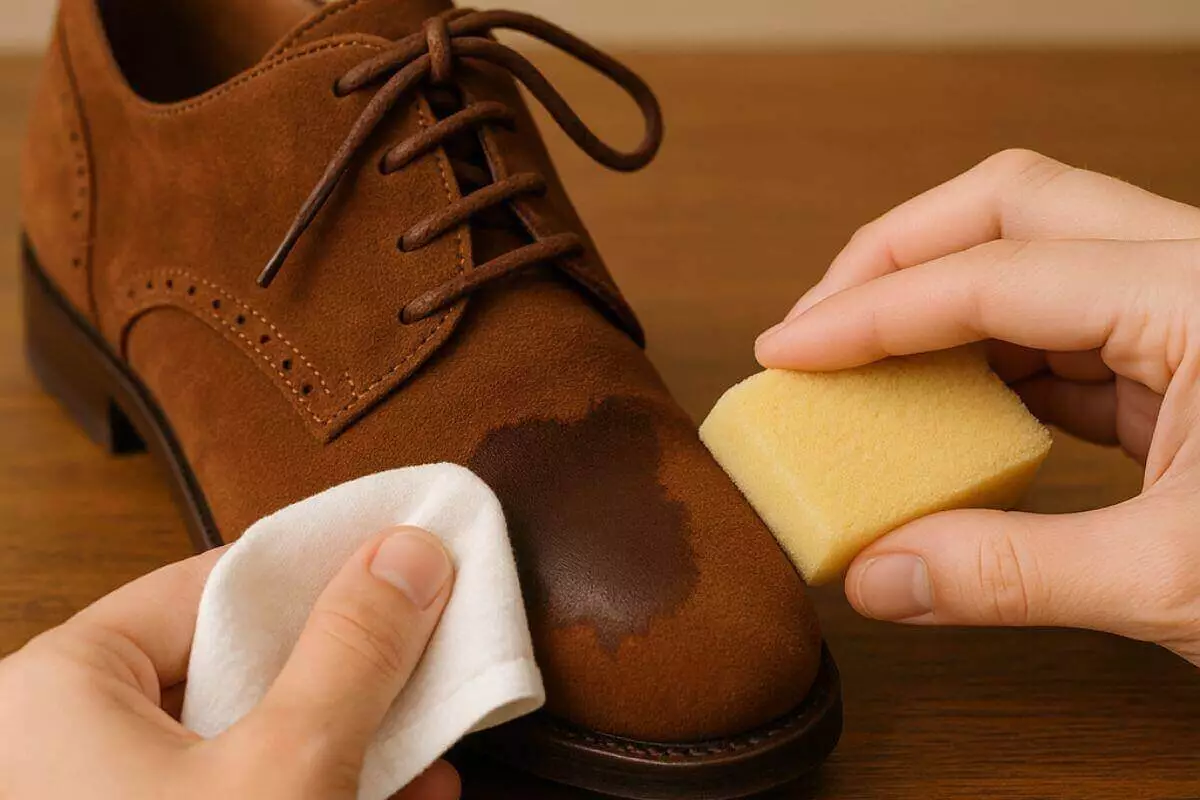
For small marks, a special suede eraser is a valuable ally. It works like a pencil eraser: gently rub the affected area until the stain disappears.
For a deeper cleaning, opt for a mild suede shampoo, diluted in a little warm water. Apply using a crepe brush or a soft sponge with circular motions. Never soak the shoe. It is better to make several light passes than one aggressive wash.
To avoid: white vinegar, baking soda, or other household products. Too abrasive, they risk irreparably damaging the texture and color of the leather.
Step 4 – Drying
Once cleaning is finished, let your shoes dry in the open air, away from any direct heat source (radiator, hairdryer, sun…). The leather must dry slowly to maintain its suppleness and shape.
Insert white absorbent paper inside to speed up drying. Avoid newspaper: the ink could bleed onto the lining.
Color renovator or recoloring spray
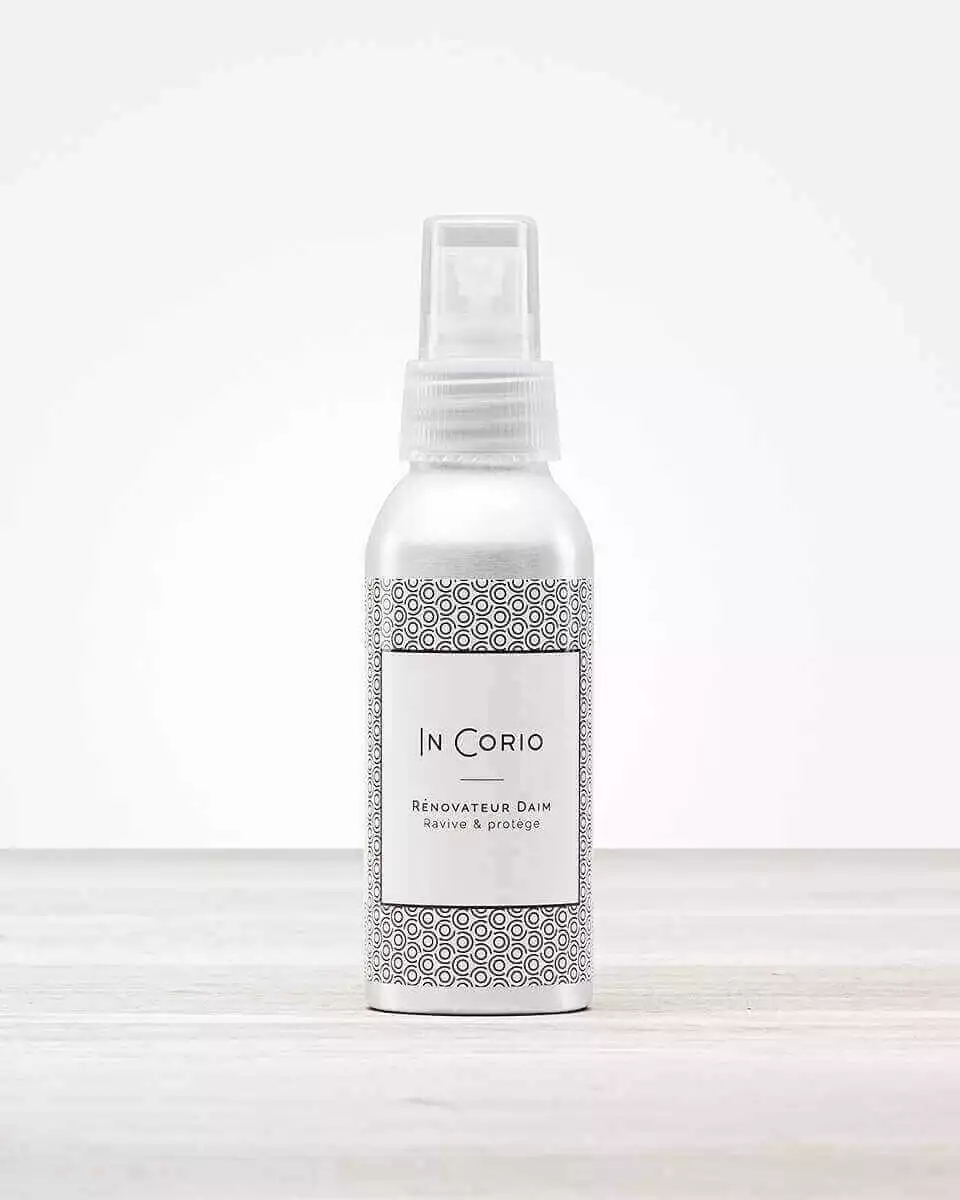
Over time, suede or nubuck can lose their shine. To revive their color, use a specific renovator spray (colored or colorless). Spray from 15 cm away, on a clean and dry surface, protecting the soles with cardboard or a cloth. Let dry for about thirty minutes.
Final brushing to restore the velvety appearance
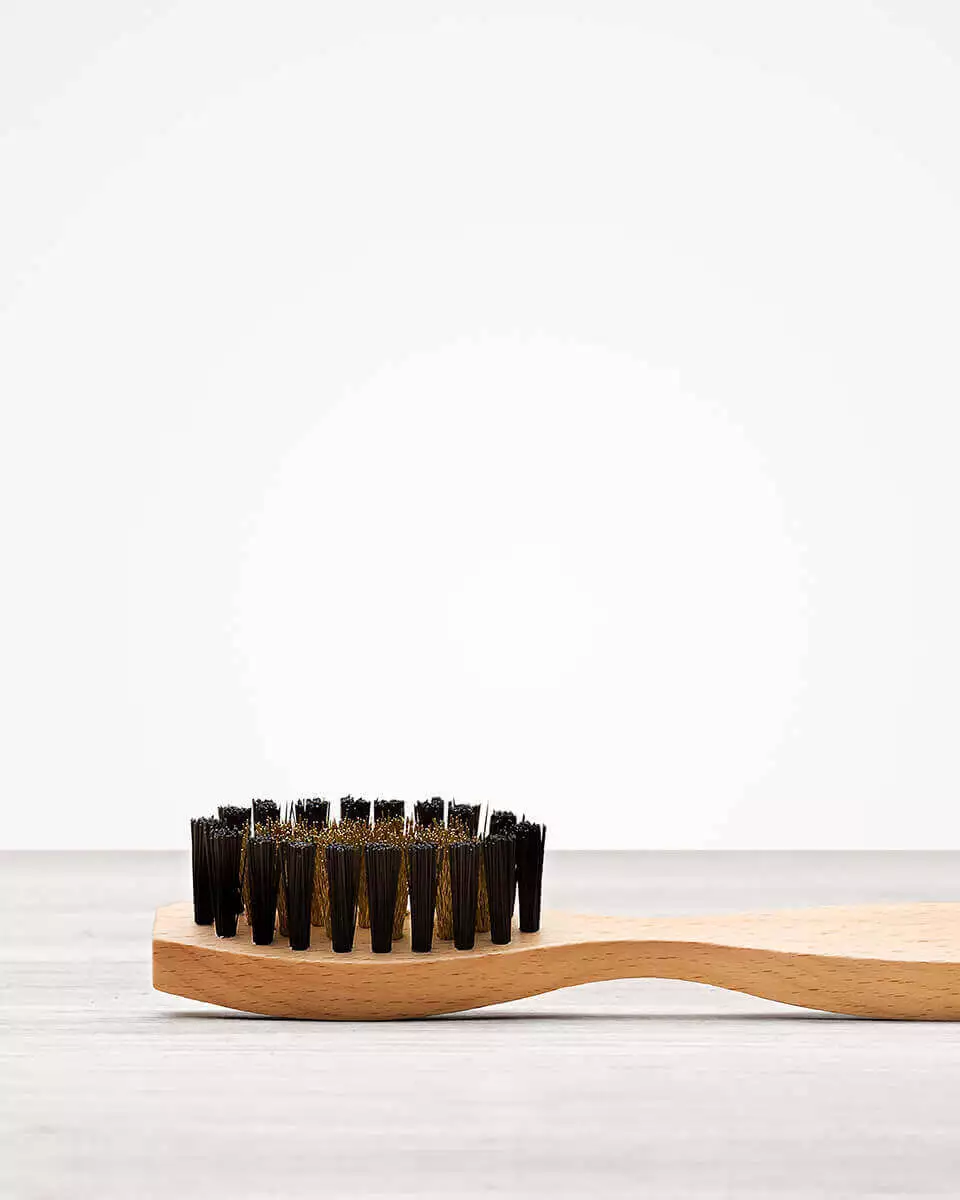
Once the leather is dry, a final pass with a crepe or brass brush helps revive the texture and restore the leather’s characteristic velvety feel.
Protection and waterproofing
Finally, to deal with everyday challenges, apply a waterproofing spray specially designed for suede/nubuck. Be careful, no regular spray or multi-purpose products. Prefer a gentle formula, adapted to the delicacy of these leathers, to be applied 2 to 3 times a year, or after each cleaning.
Oil or grease stains
A grease mark can quickly ruin the appearance of leather if not treated promptly. In this case, generously apply cornstarch or Fuller’s earth to the affected area. Let it sit for several hours, ideally overnight. Then gently brush or vacuum to remove the residue. This gentle method respects the material while absorbing the oil.
Chewing gum stains
This happens more often than you might think, especially in the city. Place the shoe in the freezer for a few minutes (in an airtight bag to protect it), then gently remove the chewing gum using a wooden spatula. The leather should never be scraped dry: patience remains your best ally.
Blood stains
Since leather is a porous material, blood can quickly become ingrained. Gently dab the area using a clean cloth soaked in lightly diluted hydrogen peroxide. Work with precision, without spreading the stain, and let it dry naturally. Never use hot water, as it would set the stain into the fibers.
What to absolutely avoid
Even the best intentions can have irreversible effects if the wrong methods are used. Here are common mistakes to avoid:
- Never put your shoes in the washing machine. The leather would become misshapen and lose its structure.
- No household products, even natural ones, for overall cleaning (vinegar, lemon, baking soda). Too harsh, they alter the texture.
- No direct heat sources: radiators or hair dryers dry out the leather, which can lead to cracking or stiffness.
- Avoid scrubbing too hard. Unlike smooth leather, suede and nubuck can become permanently shiny.
In short, a gentle but repeated action is better than a harsh and quick one.
How to remove a stain from suede or nubuck?